
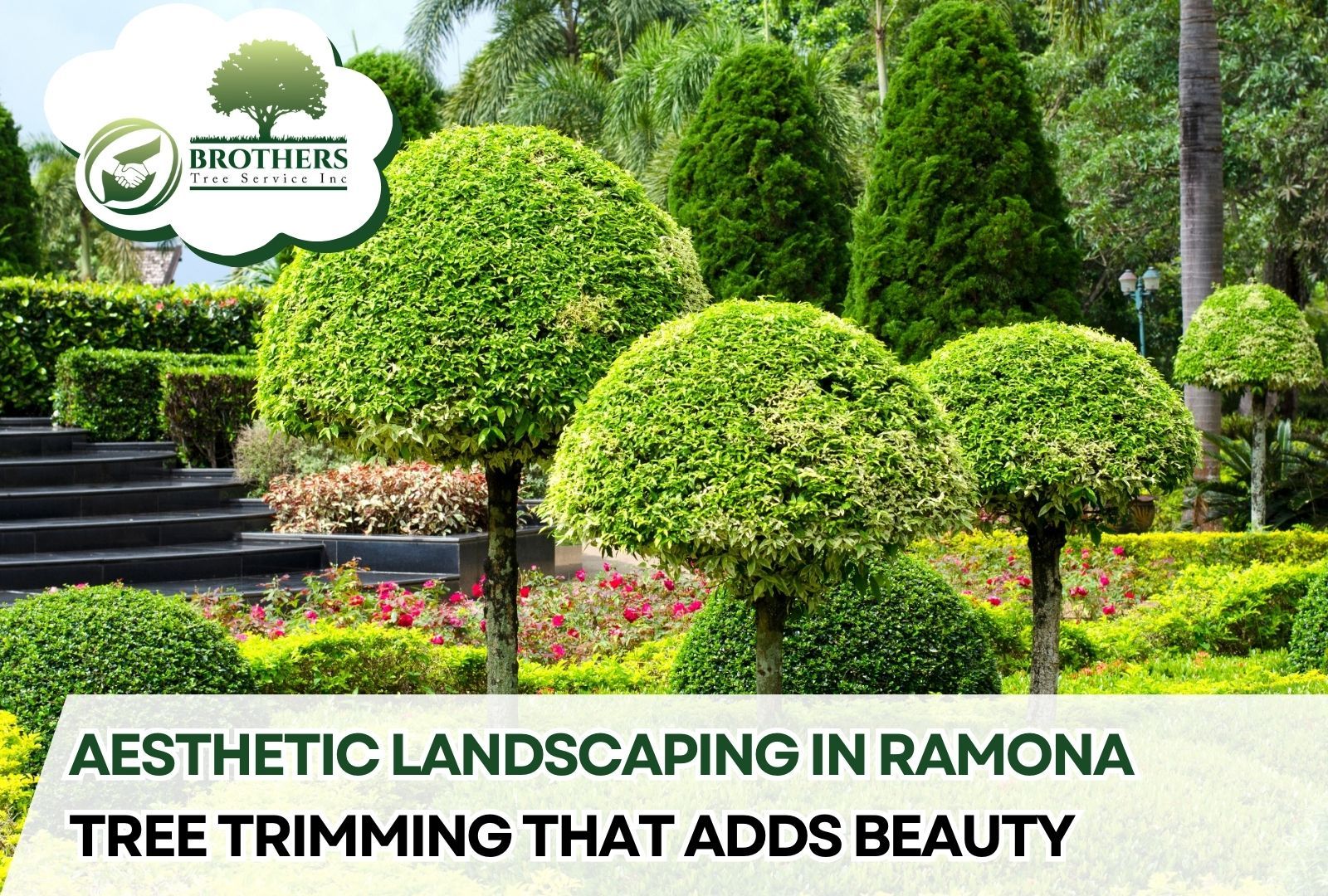
Great landscaping isn’t just about plants—it’s about creating a space that feels welcoming, natural, and well-designed. In Ramona, where trees are central to many landscapes, trimming plays a huge role in achieving aesthetic landscaping that looks intentional and polished.
At Brother’s Tree Service INC, we help homeowners use smart pruning and maintenance techniques to highlight the natural beauty of their trees and bring harmony to their outdoor spaces.
How Tree Trimming Enhances Curb Appeal
When done right, trimming shapes your trees to fit the style of your yard—whether you’re aiming for rustic, modern, or traditional.
Aesthetic benefits include:
- Clean lines and balanced silhouettes
- Better visibility of focal points like fountains or gardens
- Sunlight reaching flowers, shrubs, and lawn
- Consistent shapes that match your landscape design
Need help getting started? Our Tree Trimming Guide breaks it down step by step.
Best Tree Trimming Tips for Landscape Design
Work with your tree’s natural form
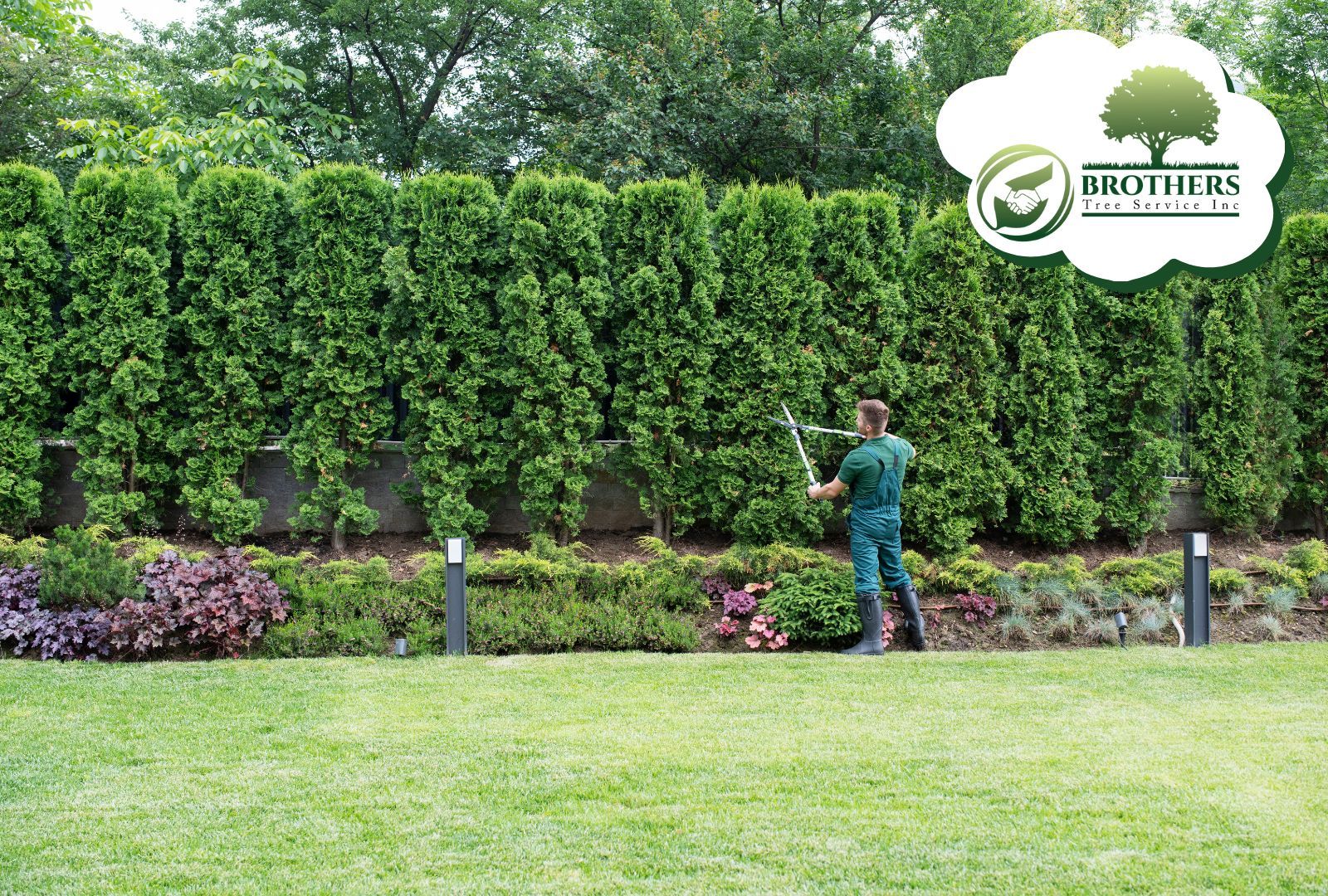
Don’t try to force a shape that doesn’t fit the tree. Instead, enhance its structure with careful, minimal pruning.
Keep lower branches tidy
Raising the canopy can create more open space, improve views, and make the tree feel lighter and more sculpted.
Create symmetry where needed
Trim to encourage balance—especially for front-yard trees or those flanking entrances and walkways.
Explore more design-driven tips in our Professional Tree Tips blog.
Pair Tree Trimming with Strategic Maintenance
Trees don’t exist in a vacuum—they’re part of a bigger visual picture. Combine trimming with other landscape updates to maximize impact:
- Mulch rings to define tree bases
- Lighting to highlight tree shapes at night
- Coordinated trimming with nearby shrubs and hedges
- Seasonal cleanups to remove debris and reveal clean lines
Our Tree Maintenance guide can help keep your entire yard cohesive and well-kept.
FAQs – Aesthetic Landscaping and Tree Trimming
What tree shapes work best for curb appeal?
Upright, vase-shaped, and round canopy forms are most popular—but it depends on your style and available space.