EAB and Shot Hole Borer in San Diego Signs can be easy to miss at first. These tiny insects hide under bark and quietly damage trees. However, learning the main warning clues helps you protect your yard and San Diego’s native plants.
By noticing early changes in your trees, you can respond quickly. In this guide, you will learn how to spot key warning signs, understand the damage they cause, and see what pest treatment options can help protect your trees and the local landscape.
Overview of Emerald Ash Borer (EAB) and Shot Hole Borer
First, recognize the threat from two very small but destructive insects: the Emerald Ash Borer (EAB) and the polyphagous shot hole borer. The EAB is a shiny green beetle about half an inch long that mainly attacks ash trees. It hides under the bark and feeds on living tissue, blocking the tree’s water and nutrient flow.
In contrast, the polyphagous shot hole borer attacks many kinds of trees and shrubs. It carries fungus that moves into the wood and clogs the tree’s vessels. This blockage can cause branches to die or even kill the entire tree. These EAB and Shot Hole Borer in San Diego Signs often begin subtly, with tiny bark holes or light sawdust around the base.
- Tiny round or D-shaped holes in the bark.
- Small piles of sawdust near the trunk or on branches.
- Gradual thinning of leaves and branch dieback.
If you miss these clues, families may later face costly tree removal and replacement. Moreover, local ecosystems suffer as invasive insects reduce shade, harm wildlife homes, and change the look of parks and canyons. Early recognition gives residents a head start on securing professional pest treatment and other control steps.
Importance of Early Detection
Spotting problems early is the easiest way to protect trees and lower the cost of pest treatment. When homeowners learn the main EAB and Shot Hole Borer in San Diego Signs, they can call a certified arborist or local extension service before insects spread through the whole tree or move to nearby plants.
Early detection also helps keep these pests out of nearby open spaces, where they can threaten native oak and ash trees. Furthermore, quick action reduces the need for heavy chemical use and protects other garden plants. Simple habits, such as regular inspections, sticky traps, and notes about tree health, make a big difference.
When infections are found in early stages, professionals can use targeted methods that are less disruptive and more affordable than full removal. For example, they may use trunk injections for EAB or careful pruning of infested branches for shot hole borer. For broader tree care tips, you can review this helpful tree health guide created for San Diego homeowners.
Visual Signs of EAB Infestation
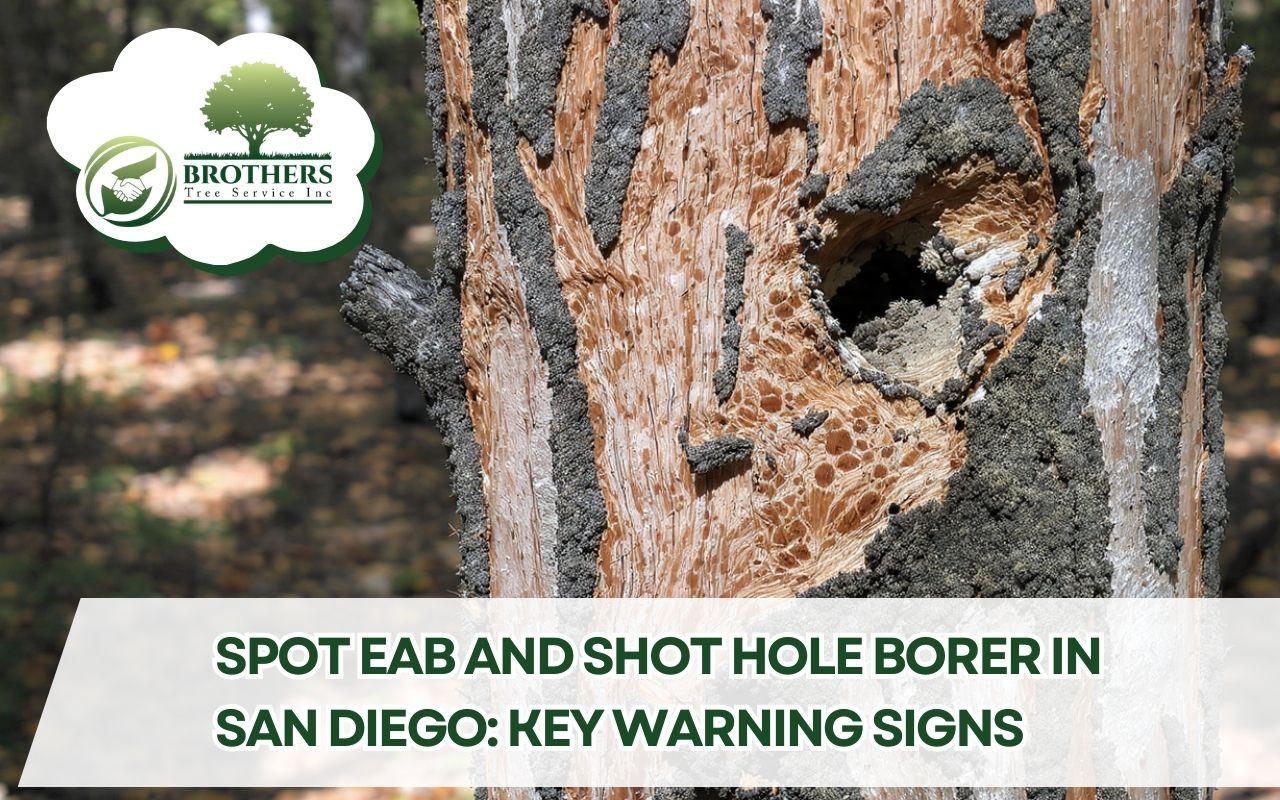
Next, look closely at your ash trees for small D-shaped exit holes about 3–4 mm wide on the bark. These holes show where adult Emerald Ash Borers have left the tree. Also, check for fine, powder-like sawdust, called “frass,” in bark cracks or at the base of the trunk, where larvae tunnel under the bark.
- D-shaped exit holes on ash tree bark.
- Powdery frass in bark crevices or at the base of the tree.
- Thinning leaves and dead branches in the upper canopy.
Additionally, watch for thinning foliage and branch dieback high in the canopy. This can be one of the earliest EAB and Shot Hole Borer in San Diego Signs. Bark splits or vertical cracks may appear as the tree reacts to feeding inside. In later stages, branches may wilt or die, and bark can peel away, showing winding S-shaped tunnels left by larvae.
Visual Signs of Shot Hole Borer Infestation
For shot hole borers, check your trees for clusters of tiny, perfectly round holes about 0.8 mm across. These are created by the borers as they enter twigs and small branches, so pay close attention to new growth. You may also see small piles of fine “shothole dust” in bark cracks or on nearby leaves.
- Groups of small round holes in twigs and branches.
- Fine sawdust on bark, branches, or leaves.
- Dark stains or sticky sap around the holes.
Also, watch for dark staining or sticky sap oozing from entry points, which can show fungal infection carried by the insect. Lower leaves on affected branches may develop yellow or brown spots as sap flow is blocked. While some signs can look like damage from GSOB (Goldspotted Oak Borer), the pattern and size of the holes help set the polyphagous shot hole borer apart.
Carefully recording these EAB and Shot Hole Borer in San Diego Signs and comparing them with trusted photos helps ensure correct identification and timely treatment.
Physical Symptoms on Trees
Physical symptoms often follow visible bark clues. One major sign is canopy thinning, where trees lose leaves in uneven patches. Branches may begin dying from the tips inward. Ash trees attacked by EAB may also grow many small shoots, called water sprouts, along the trunk as a stress response.
Additionally, check the base and roots for weak spots. Infested trees sometimes show sunken areas or changes in soil around the trunk as roots fail. For shot hole borer damage, cut cross-sections of affected branches and look for brown or black staining around the galleries. These areas may feel soft or spongy to the touch, showing internal decay.
When you notice these symptoms early, you can schedule timely pest treatment instead of waiting until the tree is too weak to recover. For extra support, you can compare what you see with the detailed tree health warning signs guide.
Differences in Damage Caused by EAB and Shot Hole Borer
It is helpful to understand how damage from each pest looks different. EAB damage is usually worst on ash trees. The larvae feed beneath the bark and carve long, S-shaped tunnels. These galleries circle the trunk, cutting off nutrients and water and causing rapid canopy dieback.
In contrast, the polyphagous shot hole borer affects many types of trees and often causes scattered branch dieback instead of a uniform decline. Its fungi colonize the galleries and leave brown staining in the wood. The holes are small and perfectly round, and dieback usually shows as individual branch tips failing rather than the entire canopy thinning at once.
Knowing these differences guides the right pest treatment choice and reduces the chance of confusing these insects with other pests, such as GSOB. Clear identification helps your arborist choose the safest and most effective plan.
Impact on San Diego’s Ecosystem
Both borers can deeply change San Diego’s urban and natural landscapes. Ash and oak trees offer shade, cooling streets and yards, and they provide food and shelter for birds and other wildlife. As EAB or shot hole borer populations grow, entire groves can die, leaving hillsides and canyons bare.
Moreover, losing tree cover can increase soil erosion during heavy rains and raise temperatures in neighborhoods. The economic impact also grows when more trees need removal and replacement. Public parks and private yards face higher long-term costs, and emergency pest treatment programs can strain city budgets and other community projects.
Preventive Measures and Treatment Options
To protect your trees, make regular checks part of your routine, especially in spring and fall. Place simple sticky traps near vulnerable trees to monitor EAB and Shot Hole Borer in San Diego Signs. Prune or remove heavily infested branches quickly, then chip or burn the wood to avoid spreading hidden insects.
- Inspect trees often for holes, sawdust, or thinning leaves.
- Keep trunks and the ground around them free of fallen branches and debris.
- Remove and dispose of infested wood safely and promptly.
Additionally, consider professional pest treatment options. Systemic insecticide injections may help protect ash trees from EAB, while bark sprays and careful pruning can reduce shot hole borer numbers. In some areas, biological controls, such as beneficial nematodes or beetles that eat the pests, show promise.
Always follow label directions and local rules when using treatments, and consult a certified arborist to choose the safest approach for your property. When you need expert help, you can explore available tree care services in San Diego to plan the right next step.
Collaboration in Pest Control Efforts
Because these insects spread easily, community teamwork is very important. Working together with neighbors, local groups, and city agencies helps share information and coordinate monitoring. Reporting suspected EAB or shot hole borer activity to extension services or forestry departments helps track outbreaks and shape public responses.
Community workshops often teach residents how to spot pests, take photos, and collect samples. In addition, citizen science projects support larger studies on how these insects move and which control methods work best. Local arborists, universities, and nonprofits may also offer free or low-cost inspections for early infestations, helping catch problems before they grow.
Frequently Asked Questions
What are the first signs my tree may have EAB or shot hole borer?
The first clues are usually small holes in the bark, light sawdust on the trunk or ground, and thinning leaves or dead branch tips. You might also spot sticky sap or dark stains around entry holes.
How can I tell EAB damage from GSOB or other borers?
EAB exit holes on ash trees are D-shaped and slightly larger than many other borers. GSOB damage usually focuses on oaks. Shot hole borer holes are tiny and perfectly round, and they often come with dark staining from fungi.
Do I always need chemicals to treat these pests?
Not always. In mild cases, pruning out infested branches, improving tree health, and removing infected wood may slow or stop the problem. A certified arborist can explain whether pesticides, biological controls, or simple cultural practices will work best.
Can healthy trees resist these pests?
Healthy trees are more likely to survive an attack or recover after treatment. Regular watering, proper mulching, and correct pruning all support a strong root and branch system. However, heavily infested trees may still require targeted pest treatment.
When should I contact a professional about my trees?
Contact a professional as soon as you see several warning signs, such as many exit holes, large areas of dieback, or heavy staining and sap. For quick advice or to schedule a visit, you can contact our tree care team directly.
Protecting San Diego’s Tree Population
Spotting early clues of EAB and shot hole borer is vital for keeping San Diego’s trees healthy and strong. When you learn to notice small exit holes, thinning canopies, and fresh sawdust on bark, you can arrange pest treatment before the damage becomes severe or spreads to nearby trees.
By working with trained professionals and staying in touch with neighbors, you help protect the wider urban forest. Together, residents can safeguard local flora and ensure future generations enjoy cool shade, natural beauty, and thriving wildlife habitats across San Diego’s neighborhoods and parks.