
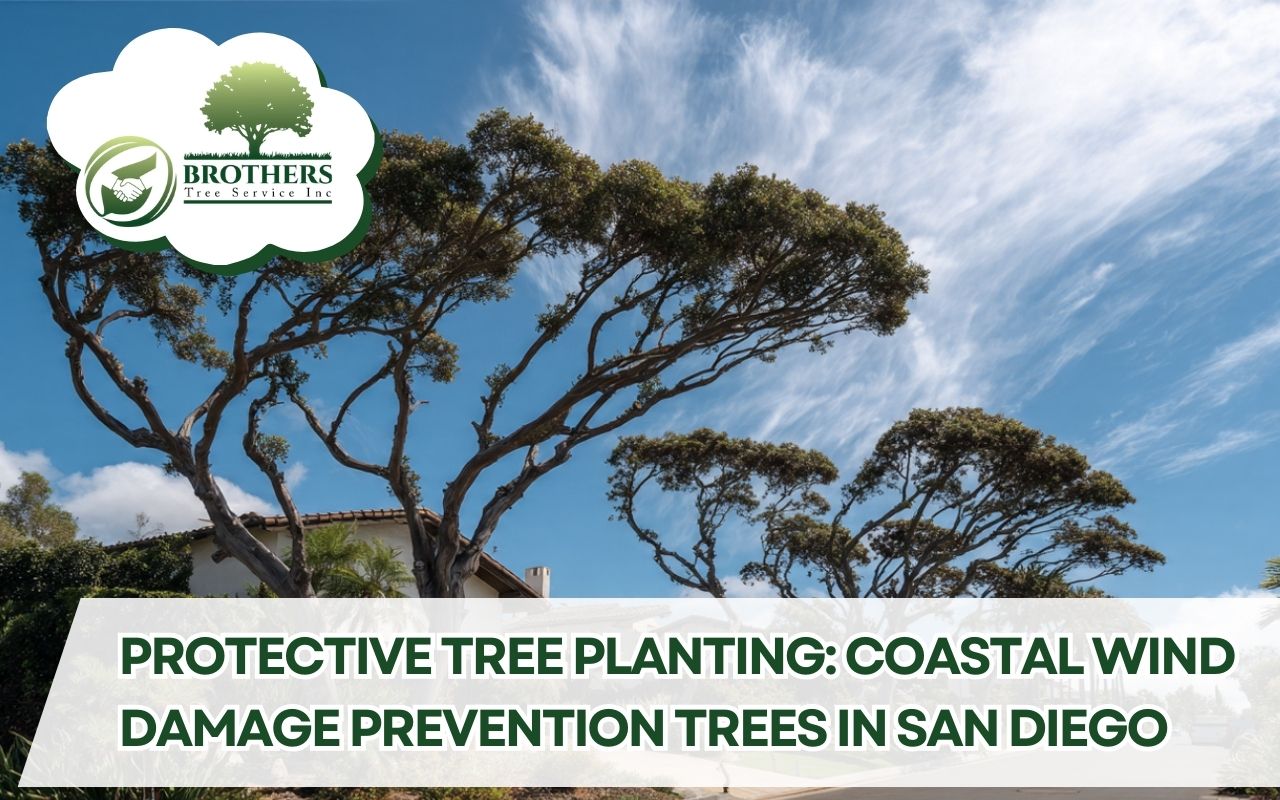
Coastal Wind Damage Prevention Trees in San Diego help shield homes and neighborhoods from strong coastal winds. These winds add charm to the region, yet they can damage landscapes, gardens, and structures. By choosing and placing the right trees, you reduce this harm and turn your yard into a protected space.
These protective plantings act as living barriers that absorb gusts and lower their impact. With simple insight into species selection and planting techniques, you can design a resilient garden. Wind pruning and careful staking keep trees healthy, so they stay resilient in storms and support a thriving landscape.
Understanding Coastal Wind Damage in San Diego
Along the San Diego coastline, ocean breezes can quickly grow into harsh winds that stress your landscape. These gusts may uproot young plants, snap branches, and strip topsoil, leaving yards dry and worn. Winds that carry salt also leave a fine layer on leaves, which can burn foliage and slow growth.
Common Signs of Wind Damage
- Grass and soil dry out quickly, especially along exposed edges of the yard.
- Potted plants and garden decor tip over or move after each wind event.
- Fences and structures lean or creak as winds keep pushing against them.
Coastal Wind Damage Prevention Trees in San Diego act as the first shield against these forces. By absorbing wind energy, they lower its strength before it reaches buildings or fragile garden beds. Planted near property edges, a well-planned tree belt can cut wind speed by as much as seventy percent.
Importance of Protective Plantings
Wind-resistant trees bring many benefits to coastal yards. They slow wind speeds, trap salt spray, and filter dust from the air. By sheltering nearby beds, they create cooler, calmer microclimates that lose less water. These features protect delicate plants and help your garden stay lush, even when coastal weather feels harsh.
Thoughtful windbreaks should feel like part of a complete landscape plan, not an afterthought. Place trees based on main wind directions so they give maximum cover. Combine taller trees with mid-sized shrubs and groundcovers to build a soft, layered wall. This structure spreads wind energy, adds depth and texture, and can even raise your property’s curb appeal.
Characteristics of Ideal Wind-Resistant Trees
The best trees for windy coastal spots share several helpful traits. Their roots, trunks, and leaves all work together to resist storms. When you plan new plantings, focus on structure and strength rather than only on flowers or fast growth.
Key Traits to Look For
- Deep, wide root systems that grip sandy or loamy coastal soils and keep trees from uprooting.
- Flexible branches that bend in strong gusts instead of snapping and causing damage below.
- Dense, evergreen foliage that breaks wind at different heights and protects your yard all year.
- High salt tolerance, so leaves resist scorch and keep growing even with regular ocean spray.
Coastal Wind Damage Prevention Trees in San Diego use these traits to protect and shape your outdoor space.
Best Tree Species for Coastal Wind Protection in San Diego
Several hardy species stand out along the San Diego coast. Monterey pine (Pinus radiata) grows quickly, develops deep roots, and has flexible limbs that move with the wind. Torrey pine (Pinus torreyana) thrives in sandy soils and salty air, making it a classic coastal windbreak choice.
Coastal live oak (Quercus agrifolia) offers a broad canopy and sturdy trunk that block lower winds. Chilean mesquite (Prosopis chilensis) brings twisted branches and strong salt tolerance. Olive and carob trees add evergreen, leathery leaves that resist salt burn. Together, these Coastal Wind Damage Prevention Trees in San Diego create a varied, reliable barrier.
Planting Techniques for Wind-Resistant Trees
Good planting plans start with layout. Along much of the San Diego coast, strong winds blow from the west or northwest. Arrange rows of trees roughly perpendicular to these winds. Space them so future canopies slightly overlap, forming a mostly solid hedge that blocks and slows the air.
Plant each tree at the correct depth so its root ball sits level with surrounding soil. Use local soil mixed with compost to support steady growth and better moisture holding. Adding mulch around, but not touching, the trunk helps reduce weeds and water loss.
Step-by-Step Planting Tips
- Position two staggered rows of trees to add depth and force wind through several layers.
- Leave enough space for mature canopy spread so trees do not crowd or compete too much.
- Water deeply during the first two years to build strong, wide root systems.
This early care gives your windbreak the stable base it needs for long-term protection.
Wind Pruning: Maintaining Tree Health and Stability
Wind pruning focuses on removing weak or poorly placed branches so trees can handle gusts more safely. Trim crossing, rubbing, or inward-growing limbs to create a balanced canopy that flexes evenly. Late winter or early spring is usually the best time, because trees are less active and stress stays low.
Plan light structural pruning every two or three years to clear dead wood and guide healthy growth. Always use sharp, clean tools to avoid torn cuts and disease. For larger or higher branches, consider professional tree trimming in San Diego so your trees stay safe and well shaped.
Strategic Staking for Wind-Resistant Trees
Staking offers temporary support while young trees take root in windy ground. Place smooth, rot-resistant wooden or flexible metal stakes just outside the root zone, so installation does not injure roots. Attach wide, soft ties that hold the trunk upright without rubbing the bark.
Allow a little movement in the trunk so it can strengthen naturally. Most trees only need stakes for one or two growing seasons. After that, remove supports so trunks do not stay weak or bendy, which could increase the risk of windthrow later.
Creating a Resilient and Beautiful Landscape
Windbreaks do not have to look stiff or plain. Combine tall trees with ornamental shrubs and groundcovers to soften lines and fill gaps. Low-growing plants such as lavender, rosemary, and manzanita add color, fragrance, and texture while catching wind-blown debris before it reaches patios or lawns.
Mix evergreen and deciduous trees for year-round interest. Flowering species like eucalyptus or redbud bring seasonal blooms, while pines and oaks hold structure in cooler months. Place paths and seating areas on the sheltered side of your windbreak to create cozy spots out of the breeze.
Maintenance Tips for Coastal Wind Protection Trees
Regular checkups keep windbreak trees safe and effective. Watch for pests, disease, or structural problems such as cracked branches and leaning trunks. Early action prevents small issues from turning into hazards and helps your trees continue to shield your property.
Coastal winds speed up evaporation, so monitor soil moisture closely, especially in dry summer months. Deep watering every couple of weeks often works better than light, frequent watering. Apply a light dose of slow-release fertilizer in spring if needed. Clear weeds or grass from the base to reduce competition.
If you are unsure about tree safety around your home, explore dedicated tree safety tips for windy conditions. For long-term care, a detailed tree health guide can help you spot stress early and plan the right maintenance.
Frequently Asked Questions
What makes a tree good for coastal wind protection?
Good coastal wind trees have deep, wide roots, flexible branches, dense evergreen foliage, and strong salt tolerance. Together, these traits help the tree stay upright, break the wind, and keep its canopy healthy, even when exposed to frequent ocean breezes and changing coastal weather.
How far from my home should I plant windbreak trees?
Plant windbreak trees far enough from buildings to avoid root or branch conflicts as they mature. Many homeowners leave at least one and a half times the tree’s expected height between the trunk and the structure. This spacing still offers strong protection while reducing long-term risk.
How often should I schedule wind pruning near the coast?
In most coastal yards, light wind pruning every two or three years works well. This schedule keeps the canopy open and balanced without stressing the tree. After major storms, check for broken or weakened branches and remove them sooner, especially if they hang over walkways or structures.
Do young trees always need staking in windy San Diego yards?
Not every young tree needs staking, even in windy spots. Trees with strong, well-spaced roots often stand on their own. Stake only when trunks bend or lean too much, and remove supports after one or two growing seasons so the tree can develop natural strength.
When should I call a professional for help with wind damage prevention?
When you notice serious damage, large broken branches, or trees leaning toward structures, it is time to get help. A certified local arborist can inspect your property and suggest safe next steps. You can also contact our San Diego tree experts to plan wind protection for your yard.
Embracing Wind as a Landscape Asset
When you choose the right trees and follow good planting, wind pruning, and staking practices, strong gusts become more manageable. Your windbreak can protect your home, garden beds, and outdoor living areas while still letting you enjoy fresh coastal air.
Coastal Wind Damage Prevention Trees in San Diego, combined with species selection, help build a landscape that resists strong breezes. With ongoing care, your yard becomes a resilient, welcoming space where the wind feels like an ally.