
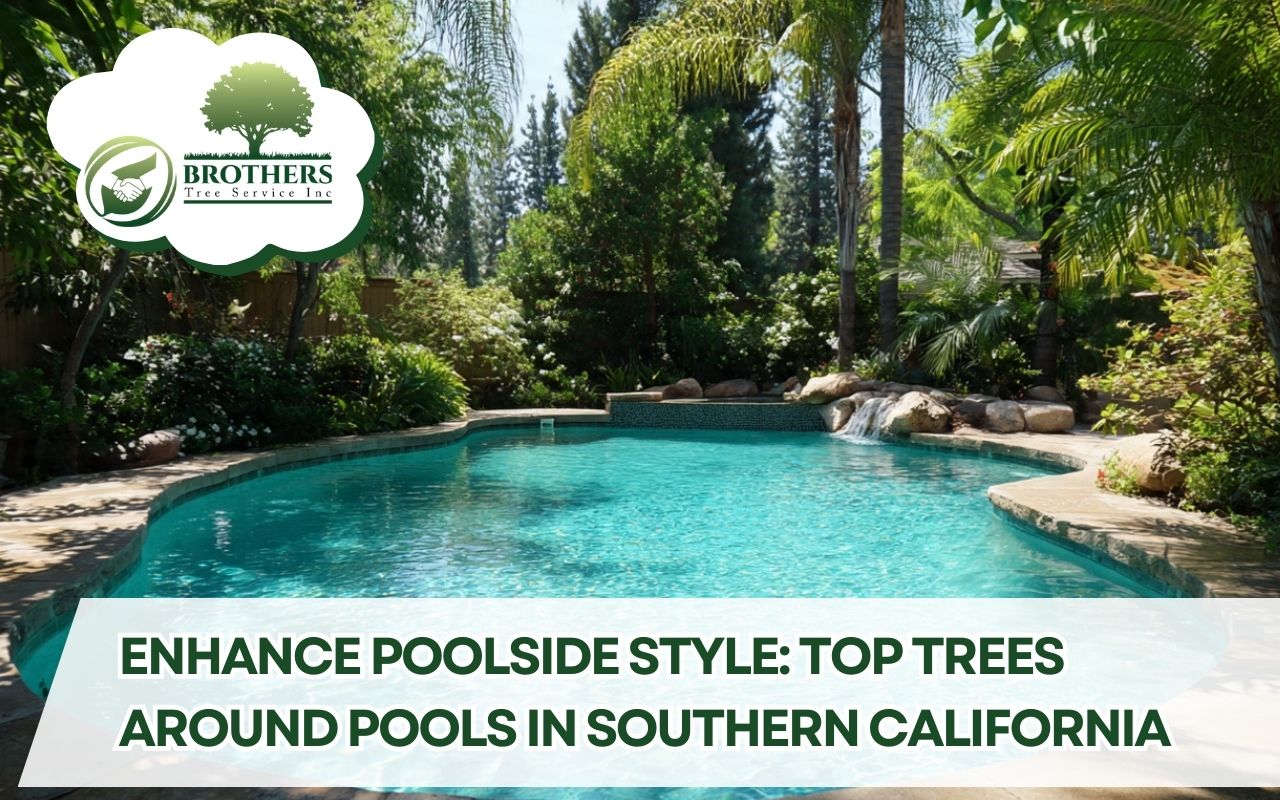
Trees Around Pools in Southern California help you blend nature and comfort in your backyard oasis. The right trees create shade, privacy, and a calm mood while still keeping your pool clean and easy to care for.
Pool-friendly trees should have gentle root systems and light leaf drop to support simple debris control. When you match each tree to your lifestyle and the sunny Southern California climate, your pool area becomes a relaxing, low-stress retreat.
Best Tree Species for Poolside Shade
When you choose Trees Around Pools in Southern California, focus on shade, clean water, and long-term safety. Palm varieties, such as the Mexican Fan Palm, offer tall, slim trunks and soft fronds that cast light, pleasant shade without heavy litter.
California Live Oak handles coastal winds and delivers deep, reliable shade with strong evergreen leaves. To keep your hardscape safe, look for trees with roots that grow mostly downward instead of spreading wide and shallow.
- Mexican Fan Palm for a classic tropical look and gentle debris drop.
- California Live Oak for sturdy, year-round shade and strong structure.
- Mediterranean Fan Palm for compact, layered fronds near pool seating areas.
- Tipuana tree for filtered shade and attractive, spreading branches.
Mediterranean Fan Palm and Tipuana tree usually send roots deeper into the soil, which helps protect deck tiles and pavers. Add mulch or low ground covers beneath their canopies to improve moisture, reduce weeds, and support steady debris control around your pool.
If you want expert help choosing shade trees and planning layouts, explore our specialized tree care services for Southern California homes.
Trees with Non-Invasive Root Systems
Non-invasive root systems are vital when trees grow near pool decks, patios, and buried pipes. Some species naturally send roots downward instead of spreading across the surface, which lowers the chance of cracked concrete or damaged plumbing.
Mexican Palo Verde and Italian Stone Pine are great picks for pool areas in Southern California. Both trees show steady, controlled root growth and limited surface roots, so they blend smoothly with paving, coping, and nearby planting beds.
When you plant them at a safe distance from the pool edge and keep a regular watering schedule, they perform well for many years. Their balanced growth makes design easier and supports strong, attractive landscapes that still protect your pool features.
Low Maintenance Trees for Pool Areas
Choosing low maintenance Trees Around Pools in Southern California is a smart choice for busy households. Bottlebrush trees offer bright red blooms and neat evergreen leaves that need only light trimming. Their drought tolerance fits perfectly with water-wise yard plans.
- Bottlebrush trees for vivid color and simple pruning needs.
- Southern Magnolia for glossy leaves and a classic, elegant style.
- Slow-growing evergreens that keep their shape with minimal trimming.
Southern Magnolia keeps most of its dark green leaves year-round, so you spend less time on debris control. Both Bottlebrush and Magnolia need little fertilizer, handle full sun, and often stand up to gentle coastal salt spray.
When existing pool trees need shaping or cleanup, consider professional tree trimming for San Diego pool landscapes to maintain safe, tidy canopies.
Flowering Trees for Visual Appeal
Flowering Trees Around Pools in Southern California add seasonal color and invite helpful pollinators like bees and butterflies. Crepe Myrtles provide bold summer flowers in pink, white, or purple, along with smooth bark that adds winter interest.
Jacarandas display soft lavender blooms in late spring, forming a dreamy canopy that filters harsh light and softens the pool area. To avoid frequent cleanup, choose flowering varieties that drop lighter petals rather than large seed pods or sticky fruit.
Plant these trees a short distance from the pool edge to reduce leaf drop into the water. This simple step keeps filters clearer and lets you enjoy rich color without constant skimming or vacuuming.
Drought-Tolerant Trees for Southern California
In our dry climate, drought-tolerant trees are essential for responsible landscaping. Olive trees adapt well to bright sun and need only moderate water once they are established. Their silver-green foliage sparkles in sunlight and pairs nicely with modern pool designs.
- Olive trees for classic Mediterranean style and low water needs.
- Desert willow for showy flowers and narrow, water-saving leaves.
- Other native or adapted species that thrive with limited irrigation.
Desert willow produces trumpet-shaped flowers and fine leaves that conserve moisture while still offering soft shade. These water-wise trees help keep soil more stable around pool structures, which can reduce movement or cracking from uneven moisture levels.
Evergreen Trees for Year-Round Beauty
Evergreen trees keep your pool area lush and inviting during every season. Italian Cypress stands tall with narrow, column-like forms that frame pool entries or pathways. Their vertical shape saves ground space while adding a refined look.
Australian Willow offers a gentler form, with slender leaves that sway in the breeze and create a relaxing sound. Both species shed little foliage, making routine cleaning faster and easier compared to many broadleaf trees.
Because they stay green, these evergreens also support privacy, structure, and color in winter when other plants may fade. Their steady presence helps your pool area stay welcoming all year.
Creating Privacy with Tall Trees
Privacy feels almost as important as shade around a pool. Tall trees with dense foliage, such as Brisbane Box and Leyland Cypress, build effective living screens that block unwanted views and soften noise.
These trees grow quickly and develop thick canopies, forming a natural wall along fences or property lines. Their layered branches help reduce traffic sounds and give swimmers a sense of comfort and seclusion.
Place tall screen trees where they will not interfere with walkways or future building plans. With routine shaping, you can keep a tidy outline while still enjoying deep shade and strong privacy.
Incorporating Fruit Trees Near the Pool
Fruit trees bring both beauty and fresh treats to your poolside setting. Meyer lemons are loved for fragrant blossoms and sweet fruit that matures in winter. Their compact size works well in smaller backyards.
Dwarf peach trees give you scented spring flowers and juicy peaches in summer. Because they are smaller, they fit near seating areas without overwhelming decks or pathways.
Place fruit trees slightly away from the pool edge, and use mats or ground covers beneath them to catch fallen fruit. Regular harvesting and pruning also support debris control and protect your pool water from extra organic waste.
Ensuring Safety with Poolside Trees
Safe Trees Around Pools in Southern California protect both swimmers and pool finishes. Avoid trees with long thorns, heavy seed pods, or very hard fruit that can hurt bare feet or mark surfaces.
Brazilian Pepper is a good example of a tree to skip. It has invasive roots and messy fruit that can create slipping hazards and damage nearby structures.
Instead, focus on trees with smooth bark, firm branches, and manageable leaf drop. Keep at least ten feet of clearance above the water, and trim branches that hang low over the pool to lower the risk of breaks.
Clear sightlines are also important. Make sure trees never block views of swimmers, especially when children or guests are enjoying the pool.
Frequently Asked Questions
What makes a tree truly pool-friendly?
A pool-friendly tree has non-invasive root systems, light leaf and flower drop, and a size that fits your space. It should handle sun, heat, and reflected light from hard surfaces.
How far should I plant trees from my pool?
Most trees should be planted at least ten to fifteen feet from the pool edge. This spacing protects plumbing, coping, and decking from root pressure and heavy shade.
Can I add new trees near an existing pool deck?
Yes, but choose species with controlled roots and modest height. A tree care professional can review your deck, soil, and lines before planting to avoid future conflicts.
How do I reduce debris in my pool from nearby trees?
Pick trees with small leaves or flowers, and place them a short distance from the water. Regular trimming and skimming, plus proper filters, keep debris under control.
Who can help me design a safe poolside tree plan?
You can work with local tree care specialists who understand our regional climate and soil. For guidance and support, contact us through the dedicated poolside tree planning contact page.
Enhancing Your Poolside Oasis
With the right Trees Around Pools in Southern California, you can balance beauty, shade, and easy upkeep. From palms and drought-tolerant trees to evergreens and flowering varieties, each option offers unique benefits.
Thoughtful placement and smart species choices support privacy, safety, and long-term tree health. To learn more about ongoing care, explore this helpful tree health guide for Southern California landscapes and start shaping a calm, inviting poolside escape.