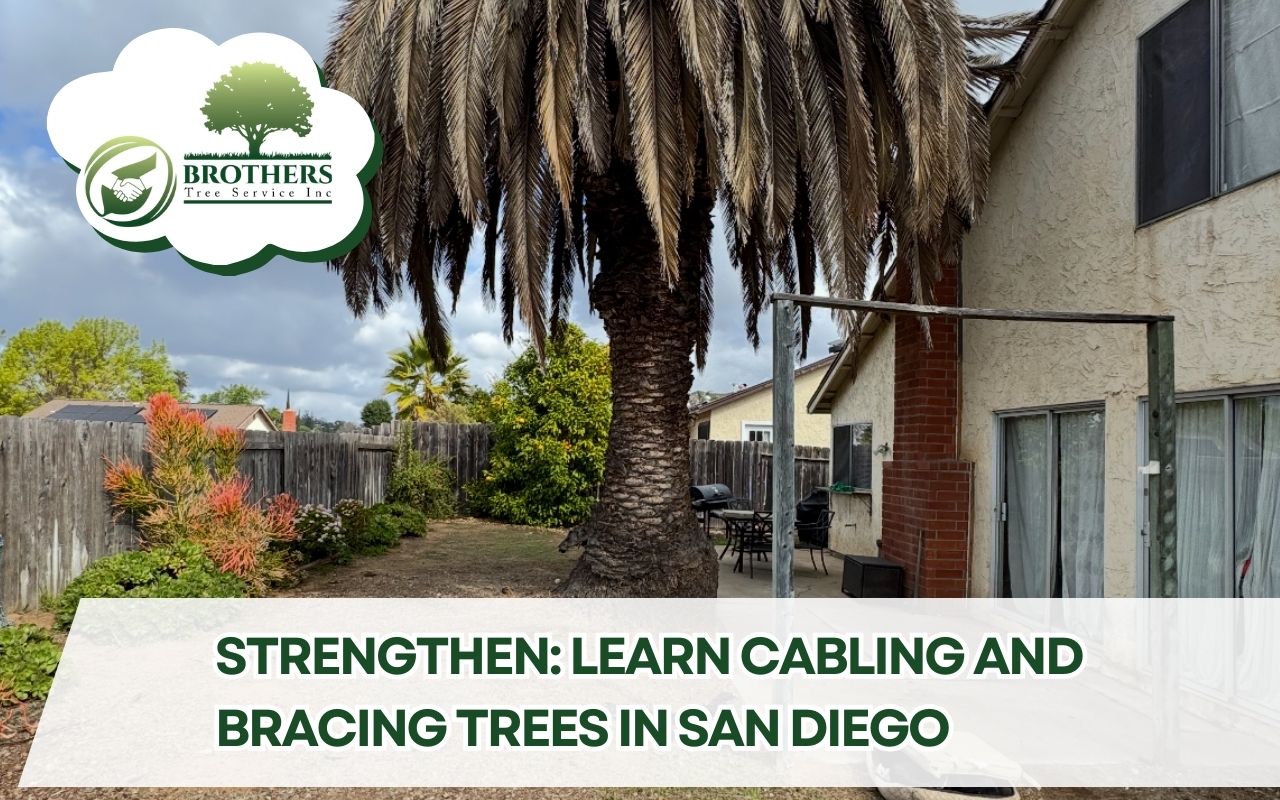
Cabling and bracing trees in San Diego helps turn your garden into a safe and beautiful place. These simple supports keep heavy branches from failing and protect the shade, views, and memories your trees provide.
With the right tree bracing, structural supports, and split crotch repair, you prevent hazards before they start. San Diego’s dry summers and sudden storms add extra stress. Therefore, expert help from professional tree services in San Diego can keep mature trees stable for many years.
Importance of Cabling and bracing trees in San Diego
When you plan cabling and bracing trees in San Diego, you reduce the chance of broken limbs during wind or storms. Early support keeps weak junctions from tearing apart and saves both your property and the tree’s natural look.
Tree bracing is especially useful when large limbs grow heavy or form tight crotches that bend under their own weight. Moreover, structural supports spread stress through the canopy, helping damaged trees stay safe and useful instead of failing without warning.
- Prevent sudden limb failure near homes, driveways, and play areas.
- Lower the risk of injury during strong coastal winds.
- Preserve valuable trees that might otherwise require removal.
Understanding Structural Supports for Trees
Structural supports are systems that reinforce weak or damaged areas of a tree. They often include steel cables, bolts, or rods that attach to strong limbs and main trunks. These parts limit movement in risky branches and reduce the chance of tears or breaks.
Additionally, structural supports sit high in the canopy, so they stay mostly hidden and do not spoil the tree’s natural shape. In San Diego, they are especially helpful for large oaks, palms, and other mature trees with heavy crowns or a developing split crotch.
Signs That Your Trees Need Cabling and Bracing
Before you invest in tree bracing, learn how to spot early warning signs of trouble. Small clues today often prevent huge repairs later.
Look closely at major branches and the points where they meet the trunk. Cracks, folded bark, or gaps in these unions, often called crotches, show that the limb is under strong stress and may fail.
- Branches that lean sharply to one side or over a roof.
- Old wounds or cavities near limb junctions.
- Dead wood inside the canopy or repeated limb failures.
- Two large stems rising from a narrow, V-shaped crotch.
If you notice several of these problems, review common tree health warning signs and schedule a visit with a certified arborist. Addressing issues early nearly always costs less than cleaning up storm damage.
Benefits of Cabling and Bracing for Tree Longevity
One major benefit of tree bracing is extended lifespan. Cables and braces reduce movement at weak points, so the tree can close wounds more easily. As a result, branches stay stronger, and you see fewer breaks after storms.
Another key benefit is improved safety around homes, cars, and walkways. Supported trees are less likely to drop heavy limbs during rough weather. Furthermore, careful bracing can guide young trees into balanced shapes, which reduces future problems and maintenance needs.
Techniques for Implementing Cabling and Bracing
One common technique uses steel cables installed between strong limbs or from a limb to the trunk. These cables act like a safety net, catching a branch if it starts to crack. Arborists choose solid anchor points and use protective sleeves so the cable does not rub or cut into the bark.
Another method uses threaded steel rods for split crotch repair. In a tight junction where two limbs pull apart, the arborist drills a hole through both sides of the crotch. Then a rod, washers, and nuts pull the limbs together. Over time, the tree grows around this brace and becomes more stable.
Professional vs. DIY Approaches to Cabling and Bracing
When thinking about cabling and bracing trees in San Diego, decide whether to hire a professional or attempt a small repair yourself. This choice depends on the tree’s size, the height of the work, and the level of damage.
Certified arborists understand tree biology, hardware limits, and safe climbing practices. They can assess risk, select the right support system, and install it without harming the tree. In addition, they carry insurance and follow safety standards while working at height.
DIY kits exist for small, low-risk projects, such as minor brace rod installations on young trees. However, mistakes in drilling, hardware size, or cable tension can injure the tree or fail during a storm. When in doubt, it is wiser to bring in a trained specialist.
Best Practices for Cabling and Bracing in San Diego
Start by choosing durable materials designed for outdoor use. Stainless steel cables, rods, and bolts resist rust caused by coastal air and regular irrigation. Use padded clamps or hardware designed for trees so the bark stays protected while the tree continues to grow.
Plan the layout carefully before any drilling begins. Place cables high in the canopy so they share the load across several limbs. Sometimes a tree is too weak or poorly placed for support alone. In that case, consider safe tree removal in San Diego instead of risking sudden failure.
- Match cable and rod sizes to the expected load.
- Drill clean, correctly sized holes to reduce injury.
- Record installation dates to plan future inspections.
- Combine bracing with thoughtful pruning and watering.
Weather Considerations for Cabled and Braced Trees
San Diego’s climate swings between dry heat and occasional storms. During long dry periods, wood can become brittle and less flexible. Deep, occasional watering helps keep trees healthier and better able to handle movement at supported points.
When storms arrive, properly supported trees usually perform better than those without help. Cables and rods spread wind forces across several limbs instead of one. After each major wind event, check visible hardware for loosening, rust, or fraying, and schedule adjustments if needed.
Maintaining Cables and Braces Over Time
Regular maintenance is essential for long-term success. Inspect cables, rods, and bolts at least once a year, ideally during pruning season. Look for rust, bending, or any loss of tension that might reduce support.
Avoid over-tightening, which can girdle the bark and slow growth. Instead, adjust tension only enough to limit dangerous movement. Also, remove or shorten branches that rub against cables to prevent wear on both the hardware and the tree.
Frequently Asked Questions
How long do cabling and bracing systems usually last?
With quality hardware and regular inspections, many systems remain effective for ten to fifteen years. However, tree growth and storm damage can shorten that timeline. An arborist should review the supports every one to three years and replace worn parts as needed.
Will tree bracing stop my tree from growing?
No, proper tree bracing allows continued growth. The tree slowly grows around rods and hardware. Still, adjustments may be necessary as trunks and limbs expand. That is why ongoing monitoring is so important for long-term safety and health.
Is split crotch repair always possible?
Split crotch repair works best when caught early, before a major break. If the split is deep, decayed, or close to the trunk base, removal may be safer. A trained arborist will weigh the tree’s health, location, and overall risk before choosing a solution.
Can I brace a tree that is already damaged?
Often, yes. Cables and braces can stabilize a damaged limb so it can heal more effectively. However, the tree must still be structurally sound. When the trunk or roots are severely compromised, support systems may not be enough to manage the risk safely.
When should I call a professional arborist for help?
Call a professional whenever branches hang over buildings, power lines, or busy areas. You should also seek help if you see large cracks, leaning trunks, or repeated limb failures. For quick guidance or an inspection, you can contact our tree care team and request a detailed assessment.
Ensuring Tree Health and Safety for the Future
By understanding cabling and bracing trees in San Diego, you create a safer landscape and protect your favorite trees. Regular inspections, thoughtful installation, and careful watering all work together to keep trees strong through heat and storms.
Combine structural supports, timely pruning, and split crotch repair when needed to extend each tree’s healthy lifespan. Whether you choose expert help or handle only very simple tasks yourself, consistent care will keep your outdoor spaces beautiful, secure, and welcoming year-round.