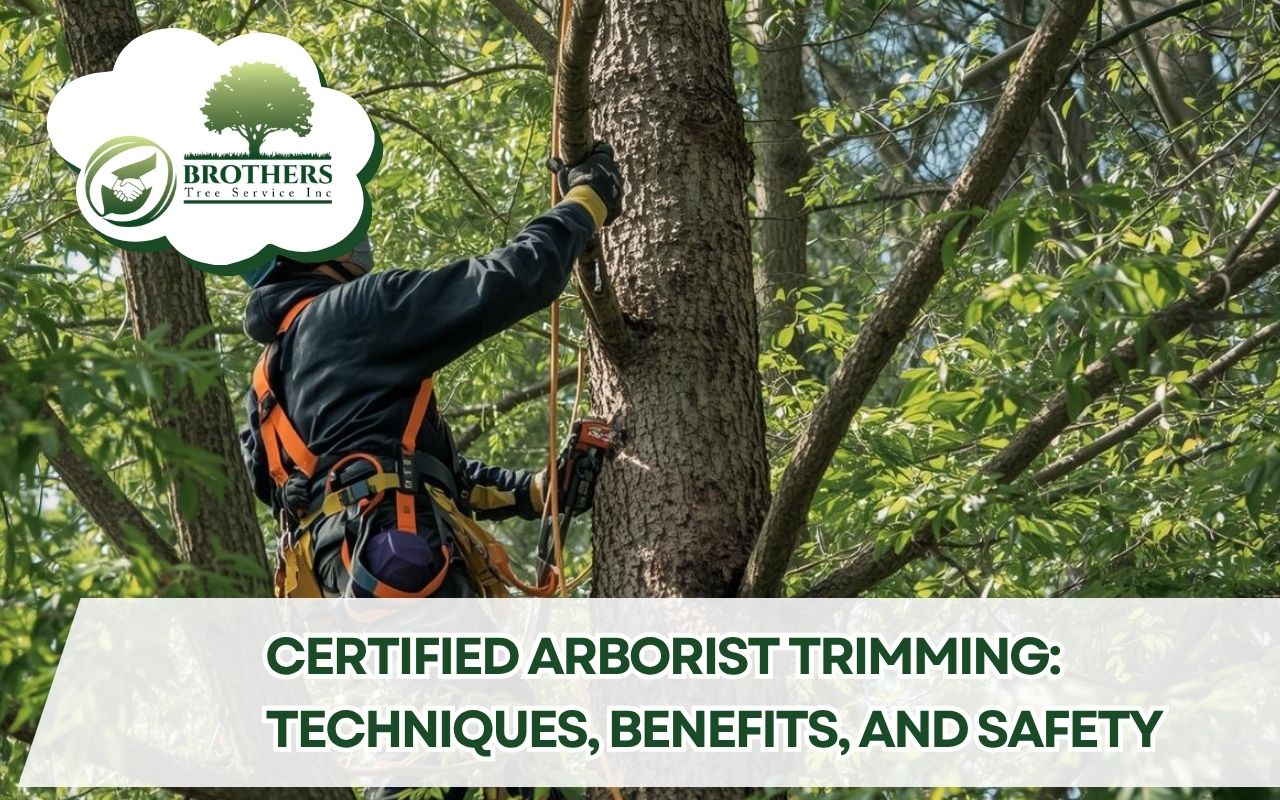
Certified Arborist Trimming keeps your trees healthy, safe, and beautiful year-round. Our certified experts make proper cuts to improve structure, boost sunlight penetration, and prevent disease. We remove hazardous limbs, clear utility lines, and shape canopies without stressing the tree. Rely on professional assessments, precise tools, and strict safety protocols to protect your property while enhancing curb appeal and value.
What Is Certified Arborist Trimming?
Certified Arborist Trimming combines science and craft to guide healthy growth. It removes deadwood, shapes structure, and protects assets. The focus is long-term vitality, not quick cuts. Arborists read species needs and site factors. They plan each cut to minimize stress and speed healing. For routine care ideas, see tree trimming tips for healthier trees.
Key Benefits of Certified Arborist Trimming
With Certified Arborist Trimming, trees allocate energy to strong limbs and roots. Air and light reach inner canopies. Risk from weak branches drops. Curb appeal rises.
- Health: remove diseased, rubbing, and crowded limbs.
- Safety: reduce failure during wind and storms.
- Longevity: encourage durable branch architecture.
- Efficiency: direct resources where trees need them most.
- Value: enhance views and property presentation. Explore benefits of trimming.
Precision Techniques Used by Certified Arborists
Certified Arborist Trimming relies on precise cuts that protect branch collars and bark. Each technique fits a specific goal and site constraint.
- Crown thinning: improve airflow and light penetration.
- Crown raising: create clearance for people, cars, and sightlines.
- Crown reduction: manage size while preserving structure.
- Structural pruning: set a strong central leader early.
- Target pruning: remove only where the tree can compartmentalize.
Species-Specific Strategies
Different species respond in different ways. Oaks prefer minimal summer cuts. Maples bleed in early spring. Pines handle selective thinning well. Timing and cut placement adapt to bark thickness, sap flow, and growth habit. A tailored plan prevents stress and promotes rapid recovery.
Health, Safety, and Risk Reduction
Early detection prevents costly failures. Arborists spot cracks, decay pockets, and pest activity before branches drop. They remove hazards and balance canopies. Proper wound size and angle speed closure. After storms, inspected trees withstand loads better and shed less debris.
Aesthetics, Curb Appeal, and Value
Certified Arborist Trimming refines natural form. It frames views, lifts canopies, and showcases bark and branching. Clean lines and balanced crowns boost first impressions. More sunlight reaches lawns and understory beds. Your landscape looks intentional, not overworked.
Maintenance Schedule and Best Timing
Prune with the calendar, not just with clippers. Timing supports flowering, fruiting, and defense. Learn seasonal windows in best time to trim trees for better growth.
- Dormant season: structural work and size control.
- Post-bloom: shape ornamentals without losing display.
- Mid-summer: light thinning and clearance.
- Storm prep: remove weak, crossing, and hanging limbs.
Tools and Professional Standards
Sharp, sanitized tools make clean cuts and reduce infection risk. Climbers use modern gear and safe tie-in methods. See essential kits at tools for tree trimming. Certified pros follow ANSI A300 and Z133 guidelines for quality and safety.
Local Expertise: Vista, CA and Nearby Areas
Microclimates matter. Coastal winds, inland heat, and irrigation patterns change pruning choices. For regional guidance and service options, visit tree trimming Vista, CA. Local knowledge ensures timing and techniques suit your site.
Frequently Asked Questions
How often should mature trees be trimmed?
Most mature trees benefit from inspection yearly and trimming every two to four years. Species, exposure, and goals adjust the interval.
Will trimming stop pests and disease?
It reduces risk by removing entry points and improving airflow. It should pair with sanitation, soil care, and correct watering.
Is topping ever recommended?
No. Topping creates weak sprouts and decay. Reduction or structural pruning offers safer, healthier size control.
Can I DIY my own trimming?
Light clearance is possible. Structural and overhead work require training, gear, and insurance. Hire a certified professional for safety.
When is the best season for fruit trees?
Late winter shapes structure. Summer touch-ups manage vigor and sunlight in the canopy. Avoid heavy cuts during peak stress.
How to Get Started
Ready for Certified Arborist Trimming? Share your goals, species list, and recent issues. We will propose a phased plan and schedule. For quotes or questions, use our contact page. Your trees will grow safer, stronger, and more beautiful—season after season.