
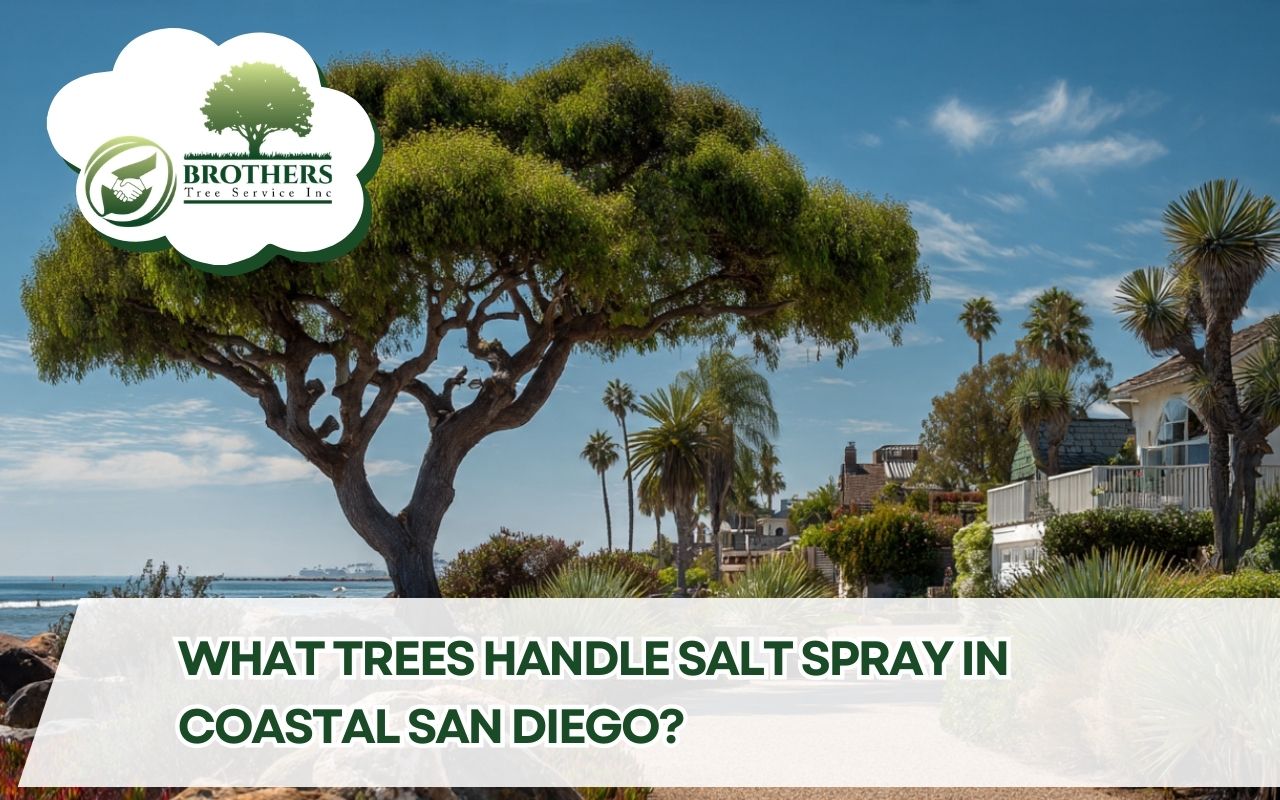
Coastal yards can look full and green, even near the ocean. The key is choosing trees that can handle salt, wind, and fast-draining soil. This guide explains the best Coastal San Diego salt spray tolerant trees, simple care steps, and smart ways to protect your landscape all year.
What trees handle salt spray in coastal San Diego?
Coastal San Diego salt spray tolerant trees are species that stand up to salty air, wind, and dry coastal soil. Brother´s Tree Service INC helps property owners choose strong trees, care for them well, and build yards that stay healthy near the coast.
Salt-tolerant trees create a stronger coastal landscape
Salt spray can burn leaves, slow growth, and weaken roots. Therefore, smart tree choice matters from the start. Coastal San Diego salt spray tolerant trees do better because they can face wind, salt, and dry periods with less stress.
These trees often share simple but helpful traits:
- Waxy or tough leaves that lose less water
- Flexible branches that move better in wind
- Deep roots that reach fresher soil moisture
- Dense canopies that protect other plants nearby
As a result, your yard needs less repair, less replacement, and less worry after windy days.
The right species improve beauty and long-term survival
The best salt spray tolerant species for coastal areas combine strength and good looks. Moreover, they help your garden feel natural and easy to manage.
Strong options for many coastal yards include California pepper, Monterey pine, Torrey pine, and Southern live oak. In some designs, Tipu tree can also add color and shade. These trees can perform well when the site, soil, and care plan fit their needs.
When you compare choices, think about these points:
- Distance from the shoreline
- Daily wind exposure
- Soil drainage and space for roots
- Shade goals and mature tree size
Because each lot is different, Coastal San Diego salt spray tolerant trees should always match the exact conditions of the property.
Site planning reduces stress on young coastal trees
Before planting, study the yard closely. Areas near the water usually get more salt and more wind. However, fences, walls, and nearby structures can create softer spaces for new trees.
Sandy soil is common in coastal zones. So, add organic matter to help hold water and support early root growth. Also, leave enough room for each tree to grow without crowding nearby plants or hardscape.
For steady growth, pair new planting with Tree Care Tips for San Diego: Your All-Season Guide. This extra support helps new trees settle in with less stress.
How to plant coastal trees for better results
Good planting makes a big difference. Therefore, use a simple process that supports roots from day one.
- Plant in spring or early fall for milder weather.
- Dig a hole twice as wide as the root ball.
- Keep the root flare slightly above soil level.
- Backfill gently and remove large air pockets.
- Add mulch, but keep it away from the trunk.
- Water deeply after planting and stay consistent.
If your yard needs expert help, Brother´s Tree Service INC can guide planting plans and connect tree choice with safe placement. For broader support, visit San Diego Tree Services.
Smart watering supports healthy roots near the coast
Young trees need regular moisture, especially in sandy soil. Still, too much shallow watering can create weak roots. Instead, water deeply and let the soil dry a bit before the next cycle.
Drip irrigation often works well because it sends water to the root zone without covering leaves in extra moisture. In addition, mulch helps the soil stay cooler and slows water loss.
Coastal San Diego salt spray tolerant trees grow better when watering is deep, steady, and matched to weather.
Wind-focused pruning keeps trees balanced and safer
Good pruning helps trees face strong air flow with less breakage. That is why wind-resistant pruning matters in coastal yards. The goal is not harsh cutting. Instead, it is a balanced shape that lowers stress during windy weather.
Focus on these pruning basics:
- Remove dead, weak, or crossing branches
- Thin crowded areas for better air flow
- Keep weight balanced across the canopy
- Avoid over-pruning, which can weaken recovery
For seasonal timing, review When Is the Best Time for Tree Trimming in San Diego?. It can help you plan cuts with less risk to tree health.
Simple protection steps limit salt and wind damage
Even strong trees benefit from added protection. For example, young trees may need a screen, a fence line, or nearby shrubs to reduce direct salt exposure. Fresh-water flushing can also help move extra salt away from the root zone.
You can improve protection by doing the following:
- Use mulch to reduce salt build-up at the surface
- Rinse soil deeply during dry salty periods
- Place hardy shrubs around young trees
- Check leaves often for burn or browning
These steps support Coastal San Diego salt spray tolerant trees and help nearby plants stay healthier too.
Mixed planting builds a fuller and more resilient garden
A layered garden is often stronger than a single-row planting. So, combine trees with hardy shrubs and groundcovers that can take coastal exposure. This creates softer wind movement and better soil cover.
Companion plants may include sea thrift, yarrow, and other hardy coastal choices that handle dry air and sandy soil. As a result, your space can look richer while also working harder.
This approach pairs well with regular care from Tree Care Tips for San Diego: Your All-Season Guide and ongoing checkups for structure, soil, and moisture.
Frequently Ask Questions
What are the best Coastal San Diego salt spray tolerant trees for home landscapes?
Good choices often include California pepper, Monterey pine, Torrey pine, and Southern live oak. However, the best fit depends on wind, soil, and space. You can also review San Diego Tree Services for help with tree selection and care planning.
How often should coastal trees be pruned?
That depends on the species, age, and branch structure. In many cases, light and planned pruning works better than heavy cuts. To plan timing, see When Is the Best Time for Tree Trimming in San Diego?.
Can salt spray tolerant species still suffer damage near the ocean?
Yes, they can. Even salt spray tolerant species may struggle if the site is too exposed or watering is poor. Therefore, mulch, deep watering, and wind breaks still matter for long-term success.
Why is tree health tracking important in coastal yards?
Coastal stress can build slowly. Leaves may burn, roots may weaken, and branch balance may change over time. For that reason, regular checks and simple care plans help prevent bigger problems. Brother´s Tree Service INC can inspect growth, shape, and stress signs before damage spreads.
When should I call tree planting services in San Diego?
Call for help before planting if your site has strong wind, poor drainage, or limited space. Professional planning can save time and help avoid the wrong tree in the wrong spot. To request support, visit Contact Us 24/7 for Tree Care Services.
Professional guidance makes coastal tree care easier
A healthy coastal yard starts with the right plan. Coastal San Diego salt spray tolerant trees can thrive when species, soil, water, and pruning all work together. Brother´s Tree Service INC offers support for planting, shaping, and long-term care, so your landscape stays stronger near the sea. To get started, contact Contact Us 24/7 for Tree Care Services.
Helpful outside sources add trusted coastal garden insight
- 9 Great Beach Plants for Seaside Gardens
- When and How to Prune Trees Safely, Including Challenging Branches