
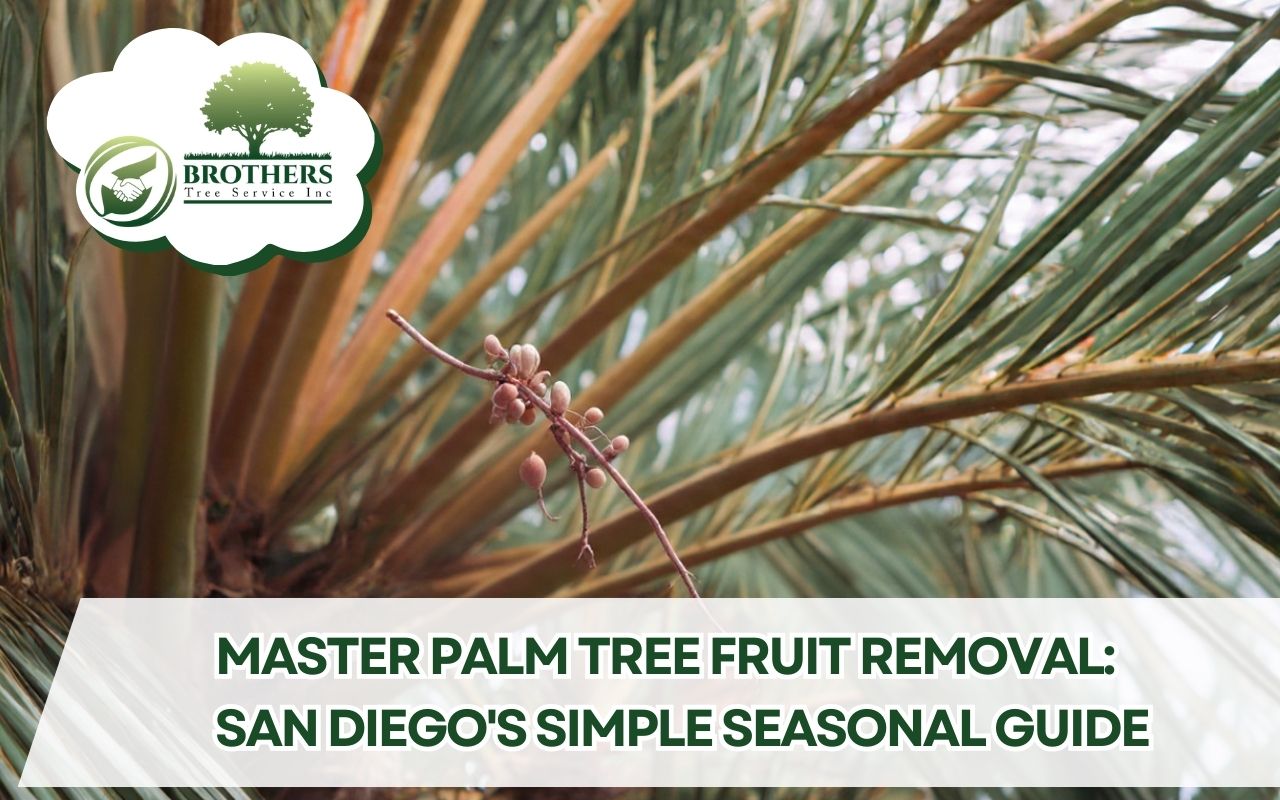
Palm Tree Fruit Removal for San Diego Seasonal Guide helps you keep your garden clean, inviting, and easy to enjoy. Palm trees bring a classic California look, yet they also create their own seasonal challenges.
As the seasons change, fruit drops, and sticky debris appear around paths, driveways, and patios. This can cause a palm fruiting mess, attract pests, and even create slippery spots. With a clear seasonal plan, your palms stay beautiful without constant frustration.
Understanding the Seasonal Cycle of Palm Trees in San Diego
Palm Tree Fruit Removal for San Diego Seasonal Guide starts with knowing how local palms behave through the year. In late winter and early spring, many species push out flower stalks that later become fruit clusters.
As warm summer weather arrives, these clusters swell and ripen before dropping heavy fruit onto lawns and walkways. During autumn and early winter, most palms shed old fruit and settle into a lighter rest period.
- Late winter to spring: flower stalks appear.
- Late spring to summer: fruit clusters grow and ripen.
- Late summer to fall: heaviest fruit drop happens.
- Autumn to early winter: palms clear remaining fruit.
By tracking these simple stages, you can schedule cleanup just before or after heavy drop. This timing reduces slipping hazards, pests, and the amount of fruit you must collect at once.
Identifying Queen Palms and Their Fruit Problems
The queen palm is one of the most common landscape trees in San Diego, loved for its slim trunk and soft, feathery fronds. This palm produces big clusters of orange-yellow fruit that add weight to the canopy and pile up below.
As the clusters mature, husks and pulp fall, building layers of debris that attract insects and rodents. Because these palms grow quickly and can reach impressive heights, fruit removal becomes difficult without planning.
- Tall, narrow, and fast-growing habit.
- Large hanging fruit clusters that grow very dense.
- Heavy fruit that can strain fronds and small branches.
- Messy buildup under the tree if fruit is ignored.
The weight of full clusters can even stress fronds and smaller limbs. Therefore, understanding this palm’s growth and fruit cycle helps you avoid broken branches and endless sweeping.
The Importance of Timely Palm Tree Fruit Removal
Palm Tree Fruit Removal for San Diego Seasonal Guide also highlights how fast fruit can stain and damage outdoor surfaces. Once fruit lands on concrete or stone, juices may leave dark marks if not cleared quickly.
Unattended fruit can ferment and smell bad, while sticky pulp makes paths slick. It also invites rodents, birds, and insects to move closer to your home. Clearing fruit soon after it ripens keeps patios, driveways, and decks in better shape.
In addition, timely removal cuts down on future work. You spend less time scrubbing stains and dealing with pests when you act early. For more details on seasonal timing, review the best time for tree trimming in San Diego so your pruning and fruit removal stay aligned.
Tools and Equipment for Efficient Fruit Removal
With the right tools, fruit removal becomes safer and quicker. Simple hand tools often handle smaller trees and low clusters, while taller palms need specialty gear.
- Pole pruner or telescoping saw for high clusters.
- Heavy-duty pruning gloves to protect your hands.
- Safety glasses or goggles to guard your eyes.
- Rake and tarp to gather and move debris easily.
- Stable ladder or scaffold for moderate heights.
Place tarps before you cut to catch fruit and stalks in one spot. This method reduces repeated bending and makes hauling debris to green waste bins much easier.
Safety Precautions When Dealing with Palm Tree Fruits
Good safety starts before you touch any tool. Always wear eye protection and cut-resistant gloves when working under palm fronds. Never stand directly below fruit you are cutting, because heavy clusters can fall faster than expected and threaten safety.
Set ladders on level ground, and ask someone to hold the base when possible. Check that pole pruners and saws are sharp and secure before each use. Finally, keep children and pets away from the work zone until all debris is removed.
Best Practices for Keeping the Area Clean During Fruit Removal
Start every job by spreading tarps around the trunk. This simple step keeps fruit and pulp off lawns, gravel, and planters. After cutting, pull clusters onto the tarp instead of letting them scatter.
Next, use a rake to gather loose pieces. Tie the tarp corners together and drag the bundle to a compost pile or green waste bin. Afterwards, rinse walkways with a garden hose to remove sticky residue and prevent slips.
Eco-Friendly Ways to Dispose of Palm Tree Fruits
Fruit does not have to end in the trash. You can cut it into smaller pieces and mix it with leaves or grass in a compost pile. This approach reduces waste and returns nutrients to your soil over time.
Some community compost programs accept palm material, although rules vary. In certain rural areas, livestock like pigs or chickens may eat parts of the fruit. In addition, some farms or zoos sometimes use palm fruit as animal feed, so it is worth asking.
When to Call Professionals for Large-Scale Fruit Removal
At times, clusters grow too high or too heavy for safe DIY work. For very tall palms or tight spaces near roofs and power lines, calling experienced help is the smartest choice. Palm Tree Fruit Removal for San Diego Seasonal Guide often becomes easier with trained crews and proper equipment.
Professionals use aerial lifts, rigging systems, and powerful cutting tools to manage large fruit loads. They also know how to protect nearby structures, pools, and vehicles from falling debris. Many homeowners rely on professional tree trimming in San Diego to combine pruning and fruit removal in one visit.
If you need a regular plan, explore the available tree care services and schedule seasonal visits. You can also contact our San Diego palm tree team to discuss safe removal options for your specific property.
Long-Term Maintenance Strategies to Reduce Fruit Buildup
A thoughtful Palm Tree Fruit Removal for San Diego Seasonal Guide is not complete without long-term habits. One of the best tactics is pruning flower stalks before they set heavy fruit. Light pruning in late winter and mid-summer keeps fronds tidy and reduces future clusters.
Mulch around the base with organic material to hold moisture and help any stray fruit break down faster. Over time, consistent monitoring and early trimming mean less debris and fewer surprises after windy days or storms.
Frequently Asked Questions
How often should I schedule palm tree fruit removal?
Most San Diego homeowners plan at least one major cleanup during peak fruit drop each year. However, properties with many palms or heavy fruit may benefit from two or more shorter sessions spread across late summer and early fall.
Can I remove palm fruit myself, or do I need a professional?
You can handle low fruit and small palms with basic tools and caution. When trees are very tall, near power lines, or close to buildings, hiring a qualified tree service is safer and often more efficient.
Will removing fruit harm my palm trees?
Proper fruit removal does not harm healthy palms. Instead, careful pruning of flower stalks and clusters often reduces stress on fronds and small branches, while also improving the tree’s overall appearance and balance.
What signs show that palm fruit is attracting pests?
Watch for gnaw marks, droppings, or increased insect activity around fruit piles. Strong fermented smells can also indicate pests feeding. If you see these signs, remove remaining fruit quickly and consider professional help.
When is the best time to combine pruning with fruit removal?
The ideal time is just before or during the main fruiting period. This timing allows crews to remove old fronds, flower stalks, and ripe clusters in one visit, reducing mess and limiting how often you need follow-up cleanups.
Enjoying a Pristine and Safe Outdoor Space
With the Palm Tree Fruit Removal for San Diego Seasonal Guide approach, your yard stays attractive and easier to manage. Timely removal, smart tools, and safe methods all work together to control fruit, stains, and pests.
By following steady seasonal routines and seeking help when trees grow too large, you protect your landscape investment. Your outdoor space can remain clean, comfortable, and welcoming for family, friends, and guests all year long.