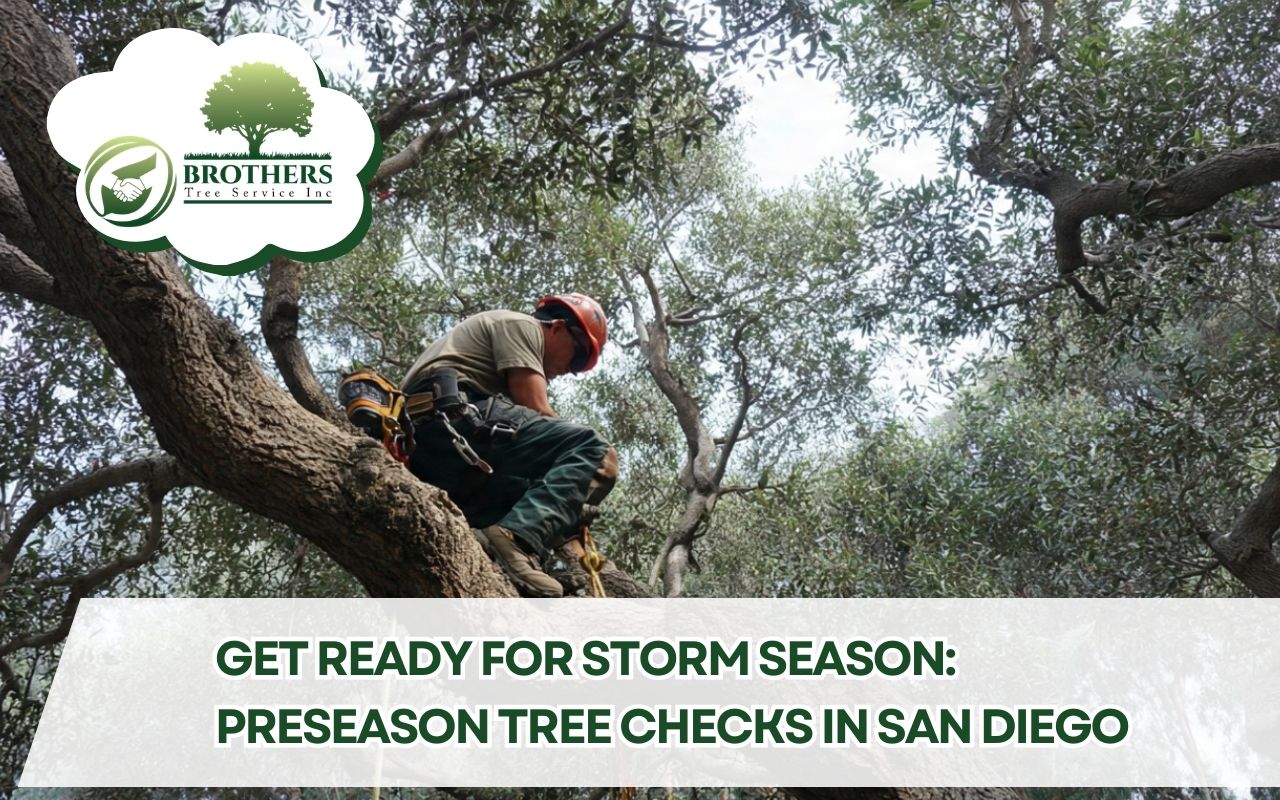
Prepare for Storm: A Guide to Pre-season Tree Inspections in San Diego. Your trees, like any living organism, need care and attention, especially before storm season. Many problems stay hidden until severe weather hits.
When was the last time you planned a Pre-season storm tree inspection in San Diego? Ignoring weak unions or deadwood can turn healthy-looking trees into hazards. However, proactive care protects your property, your family, and your yard’s beauty.
Why Pre-season Tree Inspections Matter
Scheduling a Pre-season storm tree inspection in San Diego helps you spot issues before high winds and heavy rain arrive. Early checks reveal weak unions, dead branches, and root concerns before they become emergencies.
Moreover, inspections support smart planning, so you can focus on trimming and Deadwood removal where it matters. As a result, you lower the risk of broken limbs, damaged roofs, and unsafe walkways.
- Reduce the chance of sudden limb failure
- Protect fences, vehicles, and rooftops
- Support a safer yard before storms
Common Tree Problems to Watch For
Spotting common issues early is key, because small warning signs can lead to big storm damage. Homeowners often miss bark cracks, fungal growth, or uneven leaf patterns until conditions get worse.
In addition, root rot from poor drainage, Deadwood removal needs high in the canopy, and weak unions at tight angles are frequent concerns. Therefore, learning what to look for helps you act before the next windstorm.
- Bark splits, cracks, or peeling near joints
- Fungal growth on trunk or near roots
- Leaning trunks or sudden canopy thinning
- Dead branches that look grey or brittle
Risk Assessment for Weak Unions
A solid Risk assessment for weak unions starts with understanding which trees could fail first. Begin by mapping your property and listing trees near structures, sidewalks, and power lines. Then, note cracks, leaning, and fungal patches.
Next, consider how past winds affected your yard. Trees that bent or dropped large branches during mild storms deserve priority. Consequently, this focused plan helps you choose trimming, support, or professional work with confidence.
- List trees close to homes, fences, or parked cars
- Check branch junctions for narrow angles
- Look for cracking, pinched bark, or bark ridges
- Rank trees by likelihood of failure and impact
Signs That Weak Unions Need Attention
Weak unions form when branches attach at sharp angles or grow too close together. These joints handle stress poorly, so they can split when wind and rain press the canopy. Catching them early protects people and property.
For example, look for pinched bark at the joint, plus cracks or flaking bark around the attachment. After you identify the risk, targeted pruning or bracing can reduce failures during storms.
Deadwood Removal for Safer Trees
Deadwood removal improves safety and overall tree health. Dead branches can fall without warning, and they also make the canopy catch more wind. Therefore, removing them helps air move through the tree and reduces stress on living limbs.
Start by scanning for brittle or grey branches. Then, tap suspect limbs with a light pole, since deadwood often sounds hollow. Finally, use clean tools and make smooth cuts at the branch collar for better healing.
Tree Trimming for Storm Strength
Proper trimming helps trees handle gusts and heavy rain, because it reduces wind pressure and keeps structure balanced. Instead of shortening every branch, focus on thinning crowded areas to improve airflow and light.
Also, cut just outside the branch collar to avoid unnecessary injury. By working one limb at a time, you stay safer while building a sturdier canopy for storm season.
- Thin crowded sections to improve airflow
- Remove crossing branches that rub and weaken
- Keep the canopy balanced on all sides
- Use sharp tools for clean, controlled cuts
Drainage Tips to Protect Tree Roots
Good drainage keeps roots strong, especially during intense storms. When water sits around roots, decay can spread and stability can drop. Consequently, a healthy root system helps trees stay anchored when the soil turns muddy.
Clear debris and keep mulch away from the trunk base. Then, grade soil so water flows away from trees. In some yards, shallow trenches or gravel channels can also help redirect excess water.
When to Call a Professional Arborist
A certified arborist can spot advanced problems and handle large limbs safely. Pros also recommend treatments that many homeowners cannot apply alone. If you see major cracks, heavy lean, or canopy dieback, expert help is the safer choice.
Brother’s Tree Service INC can guide pruning, Risk assessment for weak unions, and Deadwood removal based on your property’s needs. For safety planning, review your options on tree safety services to understand what preventative care can include.
Emergency Tree Removal Planning
Even with great prep, storms can still cause sudden damage. That is why it helps to keep an emergency plan ready, including contacts, safety gear, and documentation photos. When major damage happens, leave hazardous work to trained crews.
If you need Emergency tree removal after a storm, use a 24/7 response team that can handle fallen limbs and dangerous hangs. Learn how fast help can arrive through 24/7 emergency tree removal in San Diego.
Frequently Asked Questions
How often should I schedule a Pre-season storm tree inspection in San Diego?
At least once each year before storm season. However, schedule sooner if your trees are large, near structures, or recently stressed.
What is included in a Risk assessment for weak unions?
It checks branch attachments, cracks, bark ridges, and past failure signs. Then, it ranks trees by risk and possible impact areas.
When is Deadwood removal most important?
Before storms and high winds, because dead limbs drop more easily. Removing deadwood also improves airflow through the canopy.
Can I do tree trimming myself?
You can handle small branches safely. Still, high limbs, heavy cuts, and power-line risks should be handled by insured professionals.
When should I request Emergency tree removal?
Call right away if a tree has fallen, is leaning severely, or has hanging limbs. Quick action reduces property damage and injury risk.
Secure Your Yard With Proactive Tree Care
Regular inspections, targeted trimming, and early fixes give your yard the best chance against storm damage. Paying attention to Risk assessment for weak unions and Deadwood removal keeps your property safer when winds rise.
Schedule your Pre-season storm tree inspection in San Diego before the next storm system arrives. If you want expert support, reach out through the contact page for Brother’s Tree Service INC to discuss the right plan for your trees.