A leaning tree can look calm, yet it may fail fast. In coastal wind, wet soil, or poor ground, small changes matter. This guide explains San Diego leaning tree risks and assessment in simple steps, so homeowners can spot danger early and act with confidence.
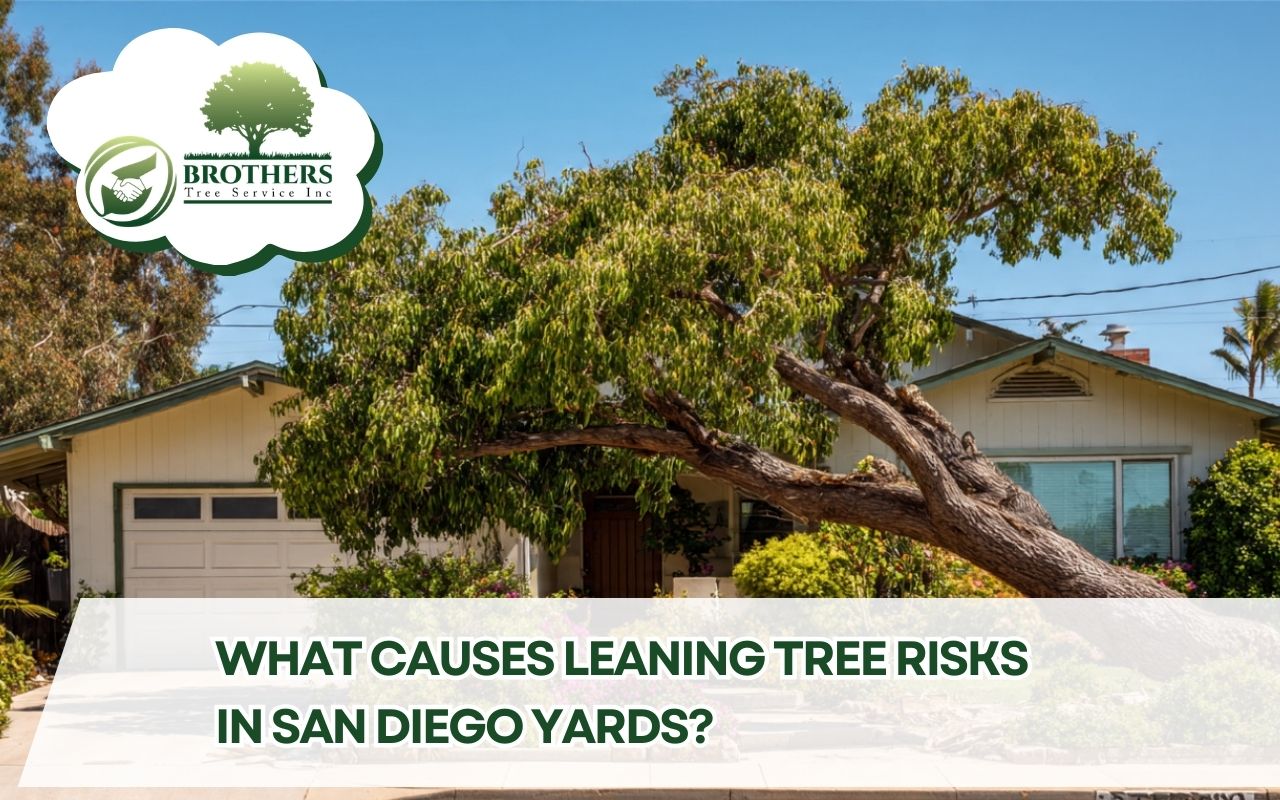
What Causes Leaning Tree Risks in San Diego Yards?
San Diego leaning tree risks and assessment starts with careful observation. Some trees lean for years and stay stable. However, a new lean can signal fast change. Brother´s Tree Service INC helps homeowners understand when a lean is normal and when it points to danger.
Early warning signs protect homes and people
The first step is to look for visible changes around the trunk, roots, and soil. A tree may still have green leaves, yet it can still be unsafe. Therefore, you should not judge safety by the canopy alone.
- A sudden tilt after wind or rain
- Cracked or lifted soil near the base
- Exposed roots or roots pulling out of the ground
- Splits in the trunk or weak branch unions
- Fungus, mushrooms, or soft wood near the base
- Dead limbs or thinning leaves on one side
These are common leaning tree danger signs. In many cases, several signs appear together. As a result, the risk grows quickly. For more yard safety tips, read Tree Safety.
Fast assessment reduces damage and stress
A prompt review can stop a small issue from becoming a major loss. For example, a weak tree may fall on a fence, roof, car, or power line. Because of that, early action often saves money and lowers risk.
San Diego leaning tree risks and assessment also matters after storms. Wet ground can reduce root support. Strong coastal gusts can then push a weak tree farther off balance. Brother´s Tree Service INC often sees problems grow after weather changes, not only during them.
- Check the tree after heavy rain
- Check again after strong wind
- Watch for new cracks in soil or bark
- Notice if the lean becomes larger
If you see new decline, review Tree Health Warning Signs to compare symptoms before the problem spreads.
Root problems often explain why trees lean
Most serious lean issues start below the soil. Roots hold the tree in place. Yet roots can weaken from rot, trenching, compacted soil, poor drainage, or erosion. In sandy or sloped areas, support may drop even faster.
Sometimes the canopy grows unevenly toward light. Then the weight shifts to one side. In other cases, nearby construction cuts support roots. Therefore, the lean is often only the final sign of a hidden issue.
San Diego leaning tree risks and assessment should always include the ground around the tree. If the base moves, the danger is higher. When the root plate lifts, the tree may fail with little warning.
A clear checklist makes inspections easier
A simple tree risk assessment checklist helps homeowners stay calm and organized. Although it does not replace an arborist, it helps you decide when to call one.
- Measure whether the lean looks new or worse
- Inspect the soil for cracks, mounds, or lifting
- Look for root exposure and decay near the base
- Check the trunk for splits, cavities, or peeling bark
- Scan the canopy for dead limbs or uneven weight
- Note targets like roofs, play areas, cars, or walkways
This tree risk assessment checklist works best when used after storms and during seasonal yard reviews. Also, keep photos from each inspection. That record can help you track change over time.
Professional tools bring clearer answers
Visual checks are helpful, but expert tools can reveal more. Arborists may use a resistograph to test wood density. They may also use sound-based tools to find hidden decay. In addition, drones can inspect the upper canopy without unsafe climbing.
These methods support better San Diego leaning tree risks and assessment decisions. As a result, homeowners can choose pruning, support systems, or removal based on real evidence instead of guesswork.
If the tree is already unstable, immediate support may not be enough. In that case, 24/7 Emergency Tree Removal San Diego may be the safest next step.
How to respond when a tree starts leaning
If a tree begins to lean more than before, act in a careful order. First, protect people. Next, reduce exposure. Then, call a trained team if the risk is high.
- Keep children, pets, and cars away from the area.
- Do not stand under the canopy or near the root zone.
- Look for wires, cracked soil, and trunk splits.
- Take clear photos from a safe distance.
- Arrange an inspection as soon as possible.
Do not try to cut or pull a leaning tree on your own. Even a small tree can shift hard and fast. If the tree has already fallen or hit part of your yard, see Tree Removal in San Diego: What to Do After a Tree Falls.
Safe solutions restore control and peace of mind
The right solution depends on the cause and the level of risk. Some trees can improve with pruning, cabling, or bracing. However, severely unstable trees may require full removal. Hazardous tree removal in San Diego is often the best option when the tree threatens a home, a public path, or utility lines.
Brother´s Tree Service INC evaluates the tree, the targets nearby, and the safest work plan. Then the team can remove weight, reduce risk, or complete removal in sections. If a tree incident affects a claim, visit Insurance for Tree Removal After a Tree Falls.
For direct service help, contact Contact Us 24/7 for Tree Care Services. You can also review service details on Tree Removal in San Diego, CA.
Frequently Ask Questions
What are the most common leaning tree danger signs?
The most common leaning tree danger signs include fresh tilt, cracked soil, exposed roots, trunk splits, and dead limbs. Also, fungus near the base can point to decay. You can compare visible issues in Tree Health Warning Signs.
When should I schedule a tree risk inspection?
You should schedule an inspection after strong wind, heavy rain, soil movement, or any sudden lean. In addition, seasonal yard checks help catch changes early. For prevention ideas, read Tree Safety.
What should I do if a leaning tree becomes an emergency?
First, keep everyone away from the area. Then avoid any cleanup work near the tree. After that, contact a qualified emergency crew. For urgent help, visit 24/7 Emergency Tree Removal San Diego.
Can insurance help after a tree falls?
Insurance may help in some cases, especially when a tree damages covered property. However, every policy is different. Therefore, it is smart to document the damage and review guidance on Insurance for Tree Removal After a Tree Falls.
When is hazardous tree removal in San Diego the best option?
Hazardous tree removal in San Diego is often best when the tree has severe root failure, major trunk cracks, heavy lean over a target, or clear decline after storms. If the tree already failed, start with Tree Removal in San Diego: What to Do After a Tree Falls.
Proactive care keeps San Diego yards safer
San Diego leaning tree risks and assessment is not only about spotting a tilt. It is about reading the full picture early. When homeowners track warning signs, use a tree risk assessment checklist, and get expert help, they lower danger and protect their property. Brother´s Tree Service INC supports that process with simple guidance and safe solutions.
Trusted outside sources support smart tree decisions
Reliable public sources also stress the need for quick action when trees weaken after storms or ground saturation. CBS News recently reported that Southern California rainstorms caused downed trees and damage across the region. Cal OES also warns that severe weather can weaken trees and create risks for homes, cars, and pedestrians.
- Series of powerful rainstorms in Southern California causes downed trees, damage and power outages
- Trees Can Still Be Hazardous Following Severe Storms