
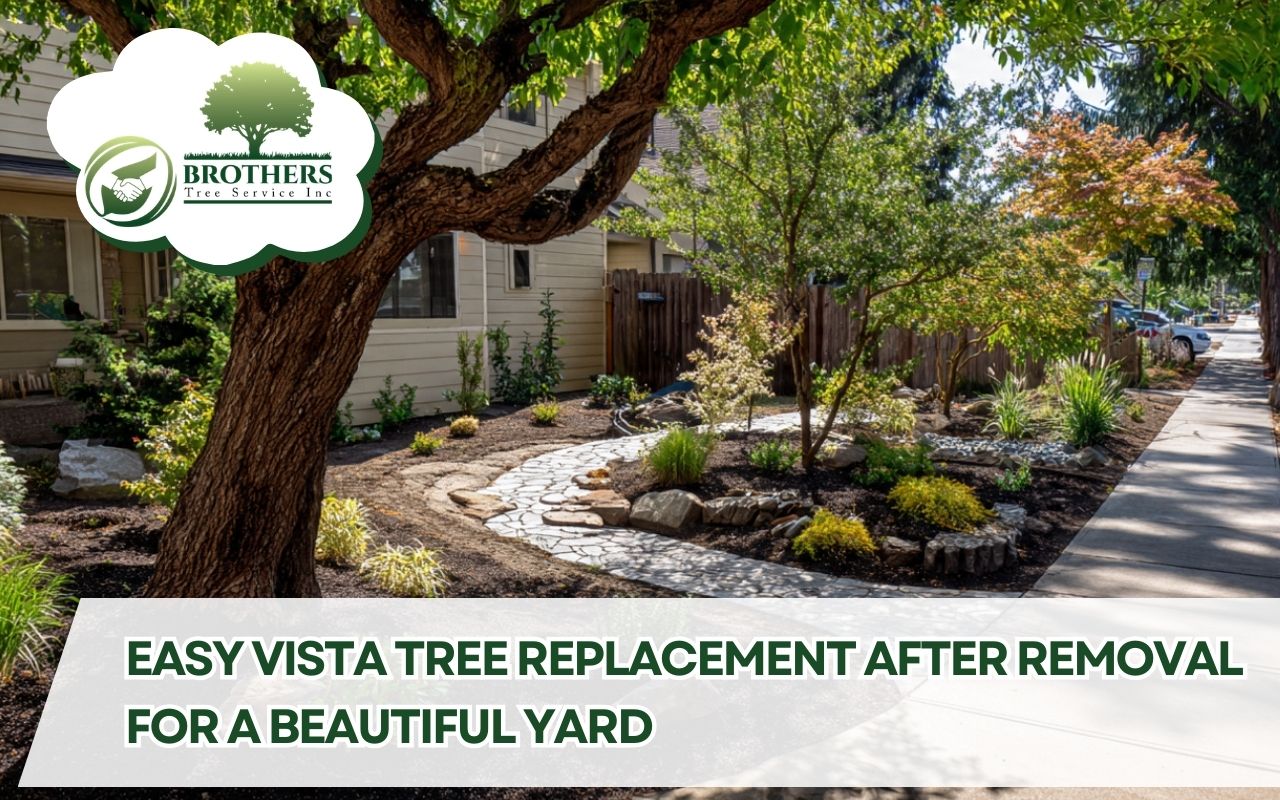
Simplify Vista Tree Replacement After Removal for Natural Beauty. Breathe new life into your outdoor space with a fresh perspective on vista tree replacement after removal. When a beloved tree is removed, it can leave an uncomfortable void. However, with the right plan, you can fill that space and lift your yard’s look.
By choosing native species that thrive locally, you build a balanced landscape. Moreover, smart soil amendment after grinding and the right watering steps help new trees grow strong. In this guide, you’ll learn how to choose trees, prepare soil, and water well, so your garden stays lush for years.
Choosing the right tree for Vista replacement
Selecting a tree means balancing size, shape, and growth speed. First, think about the view you want to shape. For example, you might want open branches for light. Or, you may want thicker leaves for privacy. Also, pick trees that handle your local weather and soil, so you avoid common problems later.
- Match mature height and width to your space.
- Choose a canopy style that fits your view goals.
- Pick trees known to do well in your area.
- Plan for upkeep like trimming and cleanup.
Maintenance matters, too. Some trees need frequent trimming. Others drop heavy seeds or fruit. Therefore, a smart choice helps your yard look great without taking all your weekends. As a result, Vista tree replacement after removal can boost comfort, curb appeal, and long-term value.
Assessing site conditions before planting
Sun, wind, and rain patterns guide the best choice. Some trees love full sun. Meanwhile, others prefer partial shade. If wind is strong, choose flexible trees to reduce broken limbs. Also, rainfall levels help you plan watering needs.
In addition, check for underground lines and nearby structures. This step helps avoid root issues near pipes, driveways, or foundations. If you need safe help to clear the area first, review tree removal in Vista, CA and plan the next steps with confidence.
Why native species work best for replanting
Native trees support local wildlife and handle local weather better. Because they evolved here, they often resist local bugs and common diseases. Therefore, you may need fewer sprays and less ongoing care. Also, once established, many natives need less water, which supports a greener yard.
- Better fit for local climate swings.
- Less stress from common pests.
- More support for birds and pollinators.
- Lower long-term watering needs.
Even so, “native” does not mean “no care.” Instead, it means smarter care. So, when planning Vista tree replacement after removal, consider native species for replanting to build a healthier, more lasting landscape.
Soil steps after stump work
Strong trees start with good soil. First, dig a hole twice as wide as the root ball. Then, loosen the soil along the sides, so roots can spread. Next, add organic material like compost to help air flow and hold moisture. Finally, keep the root flare at or slightly above ground level.
- Dig wide, not just deep, for easier root spread.
- Mix in compost for better texture and nutrients.
- Keep the root flare visible to prevent root stress.
- Backfill gently to remove air pockets.
Soil amendment after grinding
After grinding, the soil can feel packed and low on nutrients. That’s why soil amendment after grinding matters. Add well-aged compost or similar organic material to rebuild the soil. Then, blend it with the top layer and water lightly to help it settle.
If you’re deciding between options, compare stump grinding vs removal to understand what each approach leaves behind. Also, if you want local service details, see stump grinding in San Diego for practical next steps.
Irrigation for new trees
Watering is simple when you stay consistent. Drip lines and soaker hoses send water to the roots with less waste. As a rule, water deeply but not too often. This helps roots grow downward, which improves strength over time. Then, adjust based on weather and soil feel.
- Use drip or soaker hoses for steady root watering.
- Water deeper, less often, to train roots downward.
- Pause after heavy rain to avoid soggy soil.
- Check soil moisture before adding more water.
In addition, understanding the work on-site helps you plan timing. For a clear overview, read stump grinding process steps. Also, learn what makes the service helpful locally via why choose stump grinding in Vista.
Frequently Asked Questions
How soon can I plant after stump work?
Often, you can plant once the site is level and the soil is improved. However, make sure the area is free of large wood chips.
Do I need to remove all wood chips after grinding?
Not always. Still, remove excess chips from the hole area. Then, use compost to rebalance the soil mix.
What is the best way to water a new tree?
Use slow, deep watering near the root zone. Therefore, drip lines or soaker hoses usually work best.
Can native trees still need extra care?
Yes. Although natives fit the climate well, they still need steady water while establishing, plus basic checks for stress.
How do I prevent my new tree from leaning?
Stake only when needed, and use flexible ties. Then, remove stakes within a year, so the trunk strengthens naturally.
Ongoing care that keeps trees thriving
After planting, monitor often. In the first month, check weekly for bugs, fungus, or damage. Also, keep grass and weeds away from the root area. Add 2–4 inches of mulch to hold moisture and reduce weeds, but keep mulch off the trunk.
Trim lightly at first, focusing on dead or crossing branches. Moreover, if the ground settles, add soil to keep the base even. With steady care, Vista tree replacement after removal becomes a lasting upgrade that supports shade, comfort, and a healthier yard.
Build a long-lasting landscape with smart replanting
A strong yard is a living system, not just one new tree. So, pair trees with native shrubs and ground covers to form layers. This reduces erosion and helps helpful insects. Also, group plants with similar light and water needs, so upkeep is easier.
Finally, use rain capture ideas like barrels or gentle swales where allowed. As a result, your planting stays more resilient. With better soil, smart watering, and the right choices, Vista tree replacement after removal can turn an empty spot into a natural focal point.
If you’d like help planning the safest next step for your yard, contact Brother’s Tree Service INC here: contact Brother’s Tree Service INC.