A leaning tree can look harmless at first. However, roots, soil, trunk damage, and branch weight can change the risk fast. At Brother´s Tree Service INC, we help property owners understand danger signs, reduce safety risks, and plan safe tree removal before a leaning tree damages a home, fence, car, or outdoor area.
When to remove a leaning tree before damage starts?
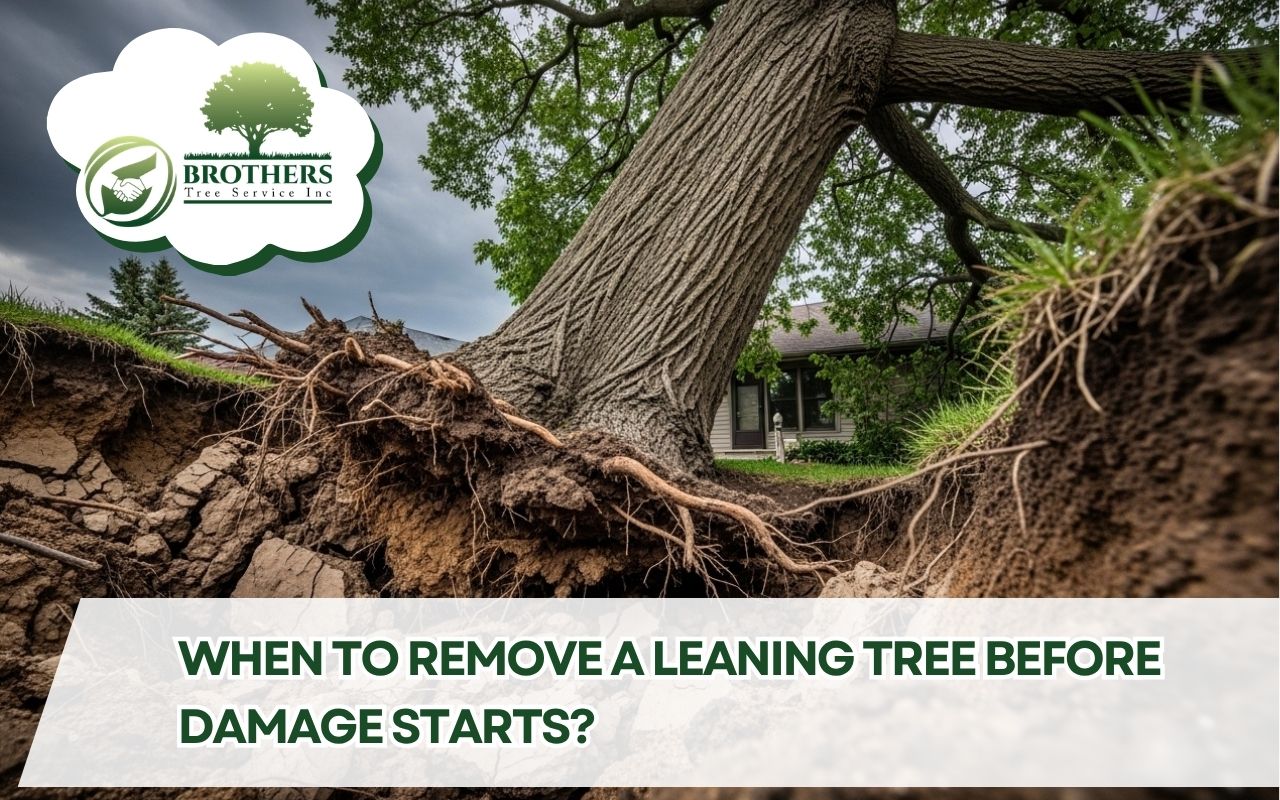
Remove a leaning tree when the lean is new, growing, or linked to cracked soil, exposed roots, trunk decay, dead limbs, or nearby targets. Knowing when to remove a leaning tree helps prevent property damage, injuries, and emergency removal during storms.
When to remove a leaning tree means knowing when a tilted tree is no longer stable or safe. Homeowners, landlords, and property managers need this guidance when roots shift, soil lifts, or branches become unbalanced. It solves the problem of waiting too long before a tree falls.
Recognize when to remove a leaning tree safely today
A leaning tree should be checked quickly when the lean appears suddenly, grows over time, or points toward people, buildings, roads, or play areas. Early action helps you avoid unsafe cuts, rushed decisions, and larger damage after rain or wind.
Some trees lean naturally for many years. However, a new lean often means the root system has changed. Therefore, check the base first. Cracked soil, lifted ground, and exposed roots can mean the tree is losing support.
Our team at Brother´s Tree Service INC checks the lean direction, root plate, trunk condition, and nearby targets before recommending the next step. As a result, you get a clear answer based on visible risk, not guesswork.
- Look for fresh soil cracks around the trunk.
- Watch for raised ground on one side of the tree.
- Check for exposed, broken, or fanning roots.
- Notice whether the lean points toward a house, car, fence, or walkway.
- Call for help if the tree moved after wind or heavy rain.
The University of California’s Western Tree Failure Database reported 6,284 total tree failure reports in its 2020 summary. This data shows why visible tree movement should be taken seriously.
Assess leaning tree danger signs before conditions worsen
Leaning tree danger signs include cracked soil, root lifting, trunk cavities, fungus, dead limbs, and uneven branch weight. These signs matter more when several appear together. A tree with many warning signs can fail faster during wind, rain, or soil movement.
Next, inspect the trunk and canopy from a safe distance. Do not stand under heavy limbs. Also, do not pull, cut, or push the tree. These actions can shift weight and increase the chance of sudden failure.
| Warning Sign | What It May Mean |
|---|---|
| Cracked soil near the trunk | The roots may be shifting or lifting from the ground. |
| Exposed or fanning roots | The anchor system may be weak or damaged. |
| Dead or hanging branches | The canopy may be unstable and unsafe. |
| Fungus or cavities on the trunk | The tree may have decay inside the wood. |
| Heavy growth on one side | The tree may have uneven weight pulling the trunk. |
According to the same Western Tree Failure Database, root failure made up 34.6% of reported tree failures in 2020. Therefore, root movement near a leaning tree is a serious warning sign.
For more guidance, review our page about early warning signs. Then, schedule an inspection when you see more than one problem at the base or canopy.
Key Takeaway: A leaning tree becomes more dangerous when root movement, trunk decay, or dead limbs appear together. Therefore, early inspection helps prevent sudden failure.
Reduce tree removal safety risks with smart planning
Tree removal safety risks increase when a leaning tree is near power lines, roofs, vehicles, fences, or busy spaces. A safe plan controls the work area, manages falling limbs, and keeps people away from the drop zone.
Brother´s Tree Service INC treats safety as the first step, not the last step. Before cutting, we look at the center of gravity, escape routes, access space, nearby structures, and branch weight. Then, we choose the safest method for the site.
The CDC’s National Institute for Occupational Safety and Health warns that tree trimmers have died from falls and electrocutions during tree trimming or cutting. Therefore, leaning trees near overhead lines should always be handled with trained support.
- Keep people and pets away from the tree.
- Do not park cars under the lean.
- Do not climb the tree to remove branches.
- Do not use a ladder against a leaning trunk.
- Call trained help when power lines are nearby.
These steps help reduce danger before the crew arrives. Also, they help prevent a small concern from becoming an emergency.
Choose professional support for safer tree removal outcomes
A professional tree removal service in San Diego helps protect people, structures, and nearby landscaping during hazardous work. Trained crews use planning, rigging, cutting methods, and cleanup steps that reduce risk and support a safer result.
At Brother´s Tree Service INC, we explain what we see before the work begins. We also talk through access needs, debris handling, and the safest removal path. As a result, homeowners understand what will happen on their property.
Professional help matters most when the tree is tall, decayed, storm-damaged, or close to a structure. In these cases, one wrong cut can move the weight in the wrong direction.
- Choose trained crews with proper equipment.
- Ask how nearby structures will be protected.
- Confirm cleanup and debris handling before work starts.
- Use a local team that understands San Diego conditions.
If you need local help, explore our local removal options. You can also learn why professional support is safer for difficult jobs.
Key Takeaway: Tree removal near homes, power lines, and outdoor living areas needs careful planning. Therefore, professional support reduces risk and improves control.
Protect your property while lowering removal damage risks
Property protection starts with controlling how branches and trunk sections move. Crews may use ropes, rigging, sectional cutting, or equipment access planning. These methods help protect roofs, fences, gardens, driveways, and nearby trees.
Damage can happen when a leaning tree falls in one large piece. Therefore, many hazardous trees are removed in sections. This method gives the crew more control and helps keep the work area safer.
We often check the fall path, ground slope, branch spread, and nearby objects before work starts. Then, we explain simple steps the homeowner can take before service day.
- Move vehicles away from the work area.
- Clear patio furniture, toys, and tools.
- Keep gates unlocked for safe access.
- Tell neighbors if branches reach over shared spaces.
- Keep children and pets indoors during removal.
You can review more safety guidance on our tree safety guide. Also, our page on common removal risks explains why planning matters.
Restore your landscape with careful replanting choices after removal
Replanting after removal helps restore shade, curb appeal, and habitat. However, the new tree must match the soil, space, light, and nearby structures. Better placement helps avoid future leaning, root pressure, and branch conflicts.
Removing a hazardous tree can leave open space in your yard. However, that space can become safer and more useful with smart planning. Choose a tree that fits the mature size of the area.
Urban trees provide shade, habitat, and air quality benefits. Therefore, removal should be paired with responsible cleanup and replanting when possible. The USDA Forest Service explains that urban forests can reduce carbon dioxide and absorb air pollutants.
Brother´s Tree Service INC can guide customers through safe removal and practical cleanup. After that, a nursery or arborist can help select a replacement tree that fits the site.
For a better understanding of safe work steps, visit our guide on safe removal methods.
Key Takeaway: Safe removal solves the immediate hazard, while smart replanting helps restore long-term beauty, shade, and balance in the landscape.
Frequently Asked Questions
How do I know if a leaning tree is dangerous?
A leaning tree is dangerous when the lean is new, growing, or paired with cracked soil, exposed roots, dead limbs, fungus, or trunk damage. Review our early warning signs to compare what you see.
When should I call someone about a leaning tree?
Call when the tree points toward a home, car, fence, walkway, or power line. You should also call after storm movement. Our contact our team page makes it easy to request help.
What happens if I ignore leaning tree danger signs?
Ignoring warning signs can lead to falling limbs, root failure, trunk breakage, and property damage. It can also increase emergency risks. Our page about common removal risks explains why delays can become unsafe.
Why is DIY removal risky for a leaning tree?
DIY removal is risky because leaning trees carry uneven weight. A wrong cut can make the trunk move suddenly. Learn how trained crews manage hazards through our safe removal methods.
How do I find a tree removal service in San Diego?
Choose a local crew that explains the plan, checks safety risks, and has the right equipment. Our local removal options page explains available help for San Diego properties.
Schedule expert help for a safer outdoor space today
A leaning tree should never be ignored when safety signs appear. Contact Brother´s Tree Service INC through our contact our team page to discuss the tree, review your concerns, and plan the safest next step.